
Reviewed · HALF-DAY
Half-Day Private Salalah East Tour
Oman keeps its best surprises east of Salalah. This four-hour private outing links Taqah’s coast, Wadi Darbat, Jebel Samhan, ancient baobab trees, and the curious Anti Gravity Point, while a local guide adds cultural context that you will not get from road signs alone. I like the flexible private format and the chance to ask direct questions about Omani life, family, and customs. The main consideration is time: five stops in four hours means several visits are brief.
I also like that the route mixes nature with ordinary places and local history. You get a beach, mountain views, wildlife habitat, old buildings, unusual trees, and a roadside mystery in one morning or afternoon. Guide Ahmed received especially warm praise for answering questions about both Salalah and his own family and culture, though your assigned guide may be different.
In This Review
- Key points at a glance
- Why this eastern Salalah route works
- Taqah beach and the eastern coast
- Wadi Darbat: the strongest nature stop
- Jebel Samhan above the clouds
- Dhofar’s old baobab trees
- The Anti Gravity Point near Mirbat
- Where the Omani lunch fits
- The value of a private guide
- Timing, pickup, and practical planning
- Who should book this tour?
- Should you book the Salalah East Tour?
- FAQ
- How long does the Salalah East Tour last?
- Is this a private tour?
- Is pickup available?
- What places does the tour visit?
- Is traditional Omani lunch included?
- What is the cancellation policy?
Key points at a glance
- Five eastern Salalah stops in about four hours: The route covers Taqah, Wadi Darbat, Jebel Samhan, baobab trees, and the Anti Gravity Point.
- Private transport and conversation: Only your group takes part, making it easier to ask questions and request itinerary changes.
- Wadi Darbat is the natural centerpiece: Waterfalls, rock formations, a riverbed, and local animals give this stop the strongest nature appeal.
- Jebel Samhan reaches above the clouds: The high viewpoint offers a broad look over Dhofar and can feel very different from the coast.
- A rare baobab grove in Oman: Around 200 baobab trees grow in Dhofar, with some estimated to be more than 300 years old.
- Traditional Omani lunch is part of the promise: The tour description highlights lunch, but no separate lunch stop or meal details are provided, so ask about the plan before booking.
Why this eastern Salalah route works
Salalah is easy to reduce to beaches and palm trees. This tour gives you a wider picture. It heads east into the Dhofar region, where the scenery changes quickly from open coast to mountain country, riverbeds, high viewpoints, and unusual plant life.
I like the way the route combines famous sights with things that need explanation. A beach is easy to appreciate on your own. The importance of Wadi Darbat, the age of the baobabs, and the Anti Gravity Point make more sense when a local guide can explain what you are seeing and answer follow-up questions.
The private setup matters here. You are not tied to a large group or a fixed conversation. The operator says extra wishes can be considered, including changes to the itinerary. That does not mean every request can be guaranteed, but it gives you a useful degree of control.
At $140 per person, the price is not a bargain for one person taking a short tour. It becomes easier to justify with two or more people sharing the private vehicle, especially since group discounts are offered. You are paying for a dedicated guide, pickup, transport, and a route that would be harder to understand by simply ticking off viewpoints alone.
A few more trips and experiences worth a look
- Salalah: Half-Day Guided Tour to Wadi Darbat & Mount Samhan
★ 4.9 · 46 reviews - West Salalah, Al Mughsail Beach, White Beach, Frankincense Tree (Half day Tour)
★ 5.0 · 41 reviews - East Salalah Highlights: Half-Day Heritage & Scenic Countryside
★ 5.0 · 13 reviews
Taqah beach and the eastern coast
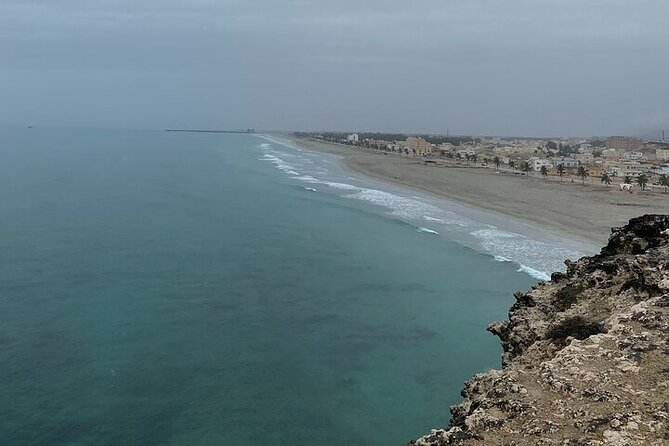
The first stop is Taqah, a coastal town east of Salalah. The beach is described by its white sand and clear water, with a cliff beside it providing a higher view across the broad sweep of the shore.
The beach visit is scheduled for about 20 minutes. That is enough for photographs, a quick look at the water, and a short walk, but not enough for a proper swim or a long spell by the sea. I would treat this as a scenic introduction rather than a beach day.
Taqah also has historical buildings and sites, which are among the wider highlights of the outing. The exact buildings visited are not specified, so ask your guide what you will see on the day. The private format may help if you want more time for local history, but the four-hour limit means the route still has to keep moving.
I like beginning at the coast because it gives you an immediate sense of Dhofar’s variety. You start with sea and sand, then leave the shore for the mountains and riverbed farther inland.
Wadi Darbat: the strongest nature stop
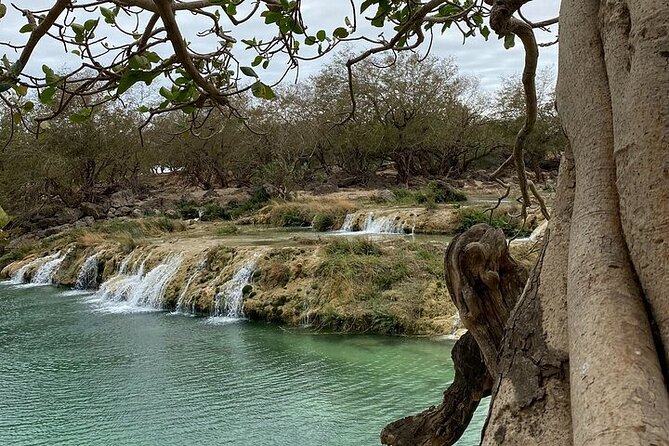
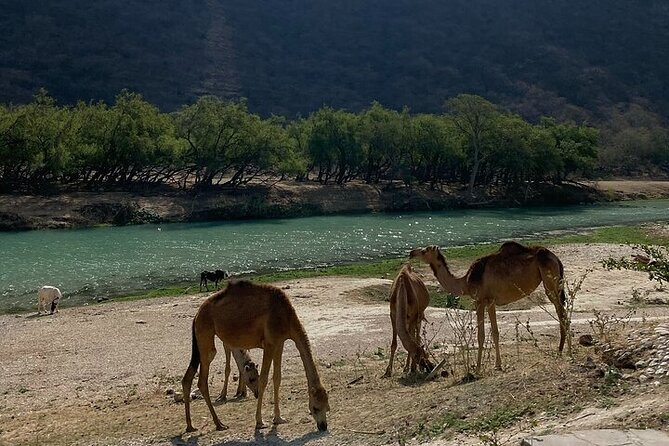
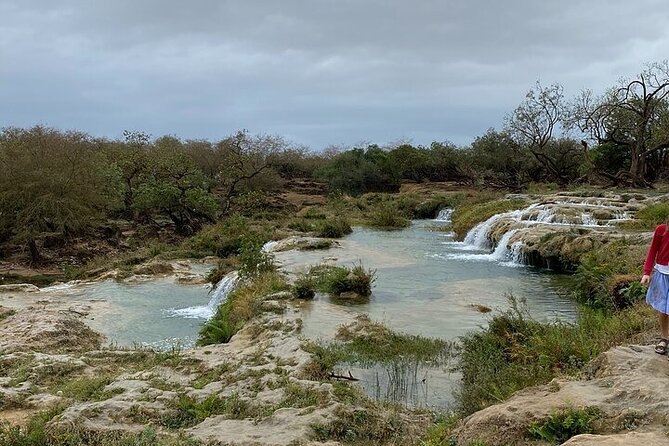
Wadi Darbat is scheduled for about 40 minutes, making it the longest named stop. That extra time is useful. The wadi lies in the Quara Mountains and is described as a place of waterfalls, rock formations, and a riverbed where animals gather to drink.
This is probably the most rewarding stop for anyone interested in natural scenery. The combination of water, stone, and mountain surroundings gives you more to look at than a single viewpoint. It is also the place where the guide’s local knowledge can add real value. You can ask about the area, the animals, and how the wadi fits into life in eastern Salalah.
Conditions can affect what you see. The description refers to numerous waterfalls, but it does not promise the same amount of water at every time of year. I would keep expectations sensible and focus on the setting rather than assuming a dramatic cascade at every turn.
The 40-minute visit is still compact. If you enjoy taking photographs or want time to watch animals, you may wish you had longer. On the other hand, Wadi Darbat is one part of a packed route, and the short visit is what allows the tour to include the coast, high mountains, trees, and the gravity stop in one outing.
Jebel Samhan above the clouds
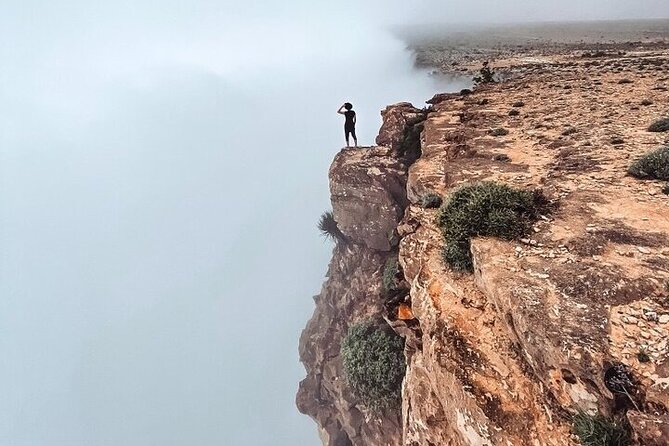
Jebel Samhan is presented as the highest point in the Dhofar region. The stop lasts about 30 minutes and centers on a panorama over the surrounding area. Because the mountain is so high, you may find yourself above the clouds.
The view gives the tour a useful change of scale. At Taqah, you are looking along the shore. At Wadi Darbat, you are close to water and rock. From Jebel Samhan, the whole setting opens out beneath you.
The phrase above the clouds should be treated as a possibility, not a guarantee. Cloud cover and weather conditions vary. Even without clouds below the viewpoint, the height and wide view make this a worthwhile pause.
I would save some questions for this stop. A local guide can help connect the mountain to Dhofar’s geography and explain what you are seeing across the region. Since the tour is private, you are more likely to get a real conversation instead of a short announcement followed by a rush back to the vehicle.
Something different, still within reach of Salalah:
- East Salalah Mountain Safari, Wadi Darbat, Beach, Camels, Dunes
★ 5.0 · 206 reviews - Salalah: Wadi Darbat, Jabal Samhan, Baobab, Mirbat Sand Dune
★ 4.6 · 178 reviews - Mountain Safari Private Tour
★ 5.0 · 105 reviews - Sunset Desert Safari Salalah Tour in Rub Al Khali – Empty Quarter
★ 5.0 · 91 reviews
Dhofar’s old baobab trees
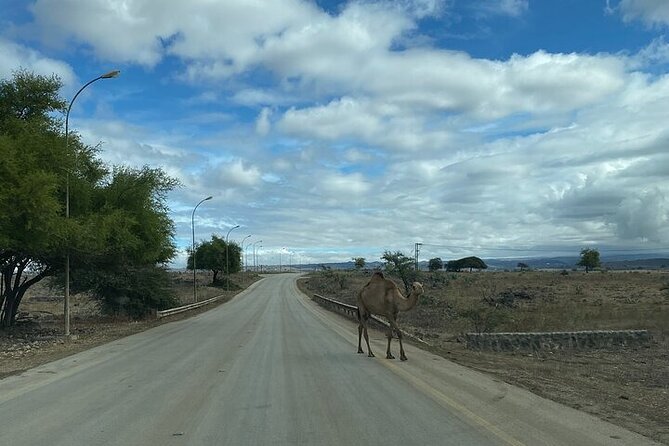
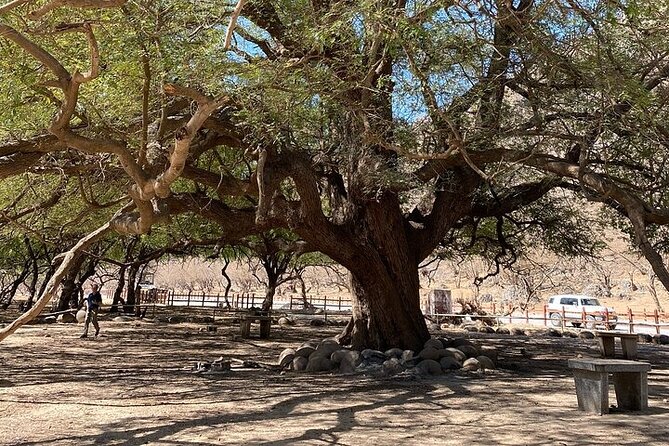
The baobab stop lasts only about 15 minutes, but the subject is unusual enough to deserve attention. Baobabs are more commonly associated with African plant life, yet they also grow in Oman’s Dhofar region.
About 200 are said to grow in Dhofar, and some are estimated to be more than 300 years old. They are threatened with extinction, which gives this stop more weight than a quick photograph beside an odd-looking tree.
You will not have a long visit here, so listen closely to the explanation and take your pictures efficiently. The value is in understanding why these trees matter and why their survival is important. I would not expect a botanical tour, since the stop is brief and the route has several more locations to cover.
This is also a good example of why a local guide helps. Without context, you might see a large, unfamiliar tree and drive on. With a few facts about its age, rarity, and place in Dhofar, the stop becomes memorable.
The Anti Gravity Point near Mirbat
The final listed stop is the Anti Gravity Point, located on a hill between Mirbat and Salalah. It takes about 10 minutes and involves a simple test: a car placed in neutral is said to roll uphill, reaching as much as 35 kilometers per hour.
The name sounds dramatic, but the tour description openly calls the phenomenon controversial. Several theories exist, and the mystery is left open. That makes this a light, entertaining finish rather than a scientific attraction with a settled explanation.
I like the fact that the stop does not pretend the issue is resolved. You can watch the demonstration, consider the slope, and decide what you think. It is the sort of roadside puzzle that gives people something to discuss after the tour.
Ten minutes is enough for the basic experiment. It is not enough for a long investigation, and the tour does not promise a technical explanation. Think of it as a curious local attraction that adds variety to the day.
Where the Omani lunch fits
The tour overview lists a traditional Omani lunch as one of the highlights. That could be a major part of the experience, since food offers a direct way to connect with local culture.
However, the timed itinerary does not name a lunch stop or state how long the meal lasts. I would confirm the details before paying, especially if the meal is important to you. Ask whether lunch is included in the $140 price, where it takes place, and whether it replaces or extends one of the sightseeing stops.
Do not assume that a four-hour outing includes a long sit-down meal unless the operator confirms it. The listed sightseeing times add up to roughly two hours, leaving the rest for driving, guiding, and possibly lunch. That gives the schedule some room, but it does not spell out the meal arrangement.
The value of a private guide
The guide is the part of this trip that can turn a tight schedule into a useful introduction to Salalah. The operator describes the guide as someone who shares local history and details that are not found in guidebooks. You can also ask questions about Oman and request changes to the route.
A particularly positive account names Ahmed, who drove around eastern Salalah, answered many questions, and discussed his family and culture. That kind of personal exchange is exactly what I would want from a private tour. It helps you move beyond scenery and understand the place through a local person’s experience.
The guide’s role matters even more at the less obvious stops. At Taqah, you may want historical background. At Wadi Darbat, you may ask about animals and water. At the baobab trees, you need context to appreciate their rarity. At the Anti Gravity Point, you may want someone to explain the competing ideas without presenting a guess as fact.
A private tour also suits different interests within one group. One person can ask about culture while another focuses on photography or nature. The operator says additional wishes may be considered, but you should raise them before the tour or at the start so the guide can judge what fits.
Timing, pickup, and practical planning
The experience lasts about four hours and offers pickup. The exact pickup area is not provided, so confirm that your accommodation is covered before booking. The tour is private, and only your group participates.
The mobile ticket is useful for keeping the booking on your phone. Confirmation is normally received at booking, unless you book within two days of departure. In that case, confirmation may arrive within 48 hours and remains subject to availability.
Most people can take part, and service animals are allowed. The tour is near public transportation, though pickup may be the more convenient choice if it is available for your location.
Because the route includes coast, wadi, mountain, trees, and a roadside stop, I would plan for a quick-moving outing rather than a slow day at one site. Keep your camera ready, listen during the short stops, and tell the guide early if one location matters most to you.
Free cancellation applies if you cancel at least 24 hours before the local start time. Within 24 hours, you do not receive a refund, and changes are not accepted. That policy is simple, but the cutoff is firm.
Who should book this tour?
I would recommend this tour to someone visiting Salalah for a short time who wants a broad introduction to the eastern side of Dhofar. It suits couples, families, and small groups who value a private vehicle and personal conversation.
It is also a good match if you want more than beaches. The route covers scenery, local culture, plant life, history, and a bit of harmless roadside oddness. The variety is the main strength.
I would be more cautious if you want long walks, extended time at waterfalls, or a relaxed lunch. Every stop is brief, and the tour covers a lot of ground. The schedule favors range over depth.
The price makes the most sense for a group that can use the private arrangement and any available group discount. Solo visitors should compare it with other options, since $140 for four hours is a significant outlay. Still, the private setting and flexible conversation may be worth it if meeting a local guide is central to your plans.
Should you book the Salalah East Tour?
Book it if you want to see several very different sides of Salalah in one compact outing and care about having a guide who can answer personal questions. Taqah, Wadi Darbat, Jebel Samhan, the baobabs, and the Anti Gravity Point make a varied route, while Ahmed’s warm, personal guiding style shows the kind of cultural exchange the experience can offer.
Before booking, confirm the pickup area and the exact lunch arrangements. If you accept that the stops are short, this is a smart way to get your bearings in eastern Dhofar without joining a large group.
FAQ
How long does the Salalah East Tour last?
The tour lasts approximately four hours.
Is this a private tour?
Yes. Only your group participates in the activity.
Is pickup available?
Pickup is offered, but the provided details do not specify the exact pickup areas. Confirm coverage for your accommodation before booking.
What places does the tour visit?
The route includes Taqah, Wadi Darbat, Jebel Samhan, a baobab tree area in Salalah, and the Anti Gravity Point between Mirbat and Salalah.
Is traditional Omani lunch included?
Traditional Omani lunch is listed as one of the tour highlights, but the available details do not state the exact meal arrangements or whether it is included in the price. Confirm this with Go Salalah Tour before booking.
What is the cancellation policy?
You can cancel at least 24 hours before the local start time for a full refund. Cancellations or changes made within 24 hours are not accepted and are not refunded.
Just added around Salalah
- Salalah East Adventure: Waterfalls, Mountain & Safari★ 5.0 · 3 reviews
- Salalah East Tour (Full Day Tour)★ 5.0 · 3 reviews
- West Coast Mountains and Beaches (Fazayah beach + Shaat cliff)★ 5.0 · 3 reviews
- Salalah: Horse Riding by the Beach★ 4.4 · 3 reviews
- Half day Salalah City Tour with Souq Visit★ 5.0 · 3 reviews
- Salalah: Wadi Darbat, ,Teeq Cave – Baobou Trees Tour★ 4.3 · 3 reviews
- Jebel Safari – Tour della montagna★ 5.0 · 3 reviews
- Empty Quarter & Lost City from Salalah★ 5.0 · 3 reviews
Half-Day, compared.
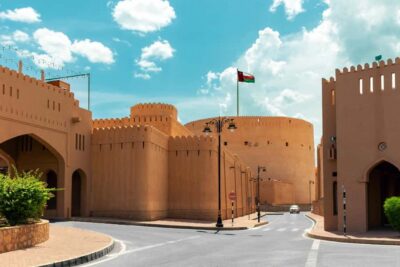
Half-Day Sightseeing Essentials Tour and Audio Guide
Read our review →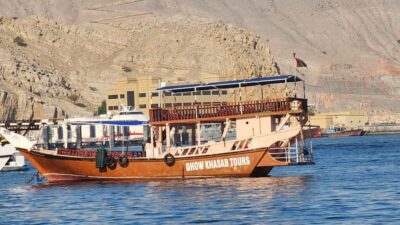
Half-Day Dhow Cruise, Dolphin Watching, & Snorkeling
Read our review →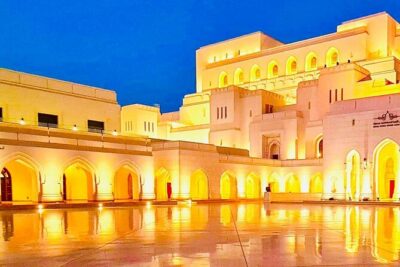
Half-Day Private Muscat City Tour – Top Landmarks in Just 4 Hours
Read our review →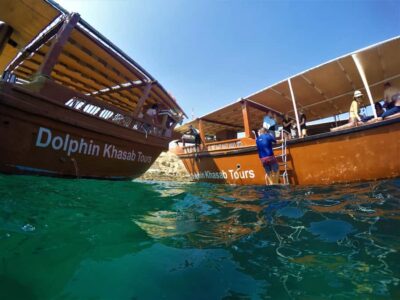

Khor Sham Half-Day Cruise with Snorkeling & Dolphins
Read our review →
Half-Day Private Muscat City Tour- with a local guide
Read our review →
Browse the lists this tour appears in