
Reviewed · HISTORICAL TOURS
East Salalah Highlights: Half-Day Heritage & Scenic Countryside
Salalah packs a lot into half a day. This private outing links Taqah’s old governor’s home, Wadi Darbat, Samhan Mountain, rare baobab trees, and Sumhuram’s UNESCO-listed ruins in one well-planned circuit. I especially like the mix of Dhofari culture and outdoor scenery, plus the chance to see places that are awkward to reach without a car.
I also like that hotel pickup, bottled water, transport, entrance fees, and an Arabic or English-speaking guide are included. The main drawback is pace: seven stops in four to five hours leaves limited time at each one, and Taqah Castle may be under maintenance when you visit.
In This Review
- Key points at a glance
- Why this half-day route works
- Taqah Castle and a glimpse of Dhofari life
- Taqah Cliff and the Indian Ocean
- Wadi Darbat, the tour’s easiest place to linger
- Tawi Attair and the Well of Birds
- Baobab trees on Samhan Mountain
- The Samhan gravity point
- Sumhuram, the ancient port above Khor Rori
- Guides, vehicles, and the pace of the day
- Who should book this Salalah tour?
- Should you book East Salalah Highlights?
- FAQ
- How long does the East Salalah tour take?
- Is hotel pickup available?
- Is Taqah Castle currently open?
- What is included in the price?
- Is this a private tour?
- What happens if bad weather cancels the tour?
Key points at a glance
- Taqah connects the scenery to local life: The old castle, fishing town, dried sardines, mud houses, and hillside watchtower give the morning a human story.
- Wadi Darbat is the relaxed outdoor stop: Lakes, seasonal falls, pedal boats, kayaks, and grazing animals make it the best place to slow down.
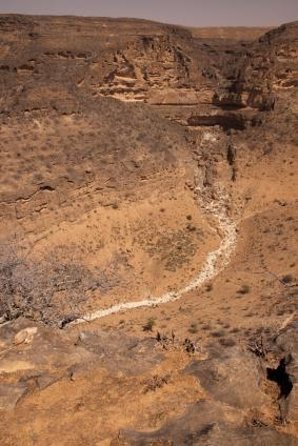
- Tawi Attair is a serious natural spectacle: The limestone sinkhole drops about 211 meters and is known locally as the Well of Birds.
- Samhan has two unusual surprises: Rare baobab trees appear in Wadi Hinnah, followed by a road where cars seem to roll uphill.
- Sumhuram supplies the historical finale: The old port once played a role in Dhofar’s frankincense trade and overlooks the Indian Ocean.
- The private format improves the value: Your group has its own vehicle and guide, with different vehicle arrangements based on party size.
Why this half-day route works
Salalah is easy to underestimate. The city is the base, but the most memorable sights spread east through Taqah, Wadi Darbat, the Samhan mountain area, and Khor Rori. This tour gives you a taste of all four settings without requiring a full day on the road.
I like the route because it does not rely on one type of attraction. You get a museum-like stop, coastal views, a valley, a geological formation, unusual trees, a playful roadside curiosity, and an archaeological site. If your time in Salalah is short, that variety is useful.
The private format matters, too. The tour is limited to your own group, rather than mixing you with strangers. A group of one to three adults uses a two-wheel-drive vehicle. Four to six adults use a four-wheel-drive vehicle, while seven to nine adults travel in two four-wheel-drive vehicles with one guide and two drivers.
The listed price is $170 per person. That is not a budget outing, especially for a solo visitor, but the cost includes transportation, fuel surcharge, bottled water, taxes, entrance fees, and the guide. For a couple or small group that wants a private vehicle and a guide for several different stops, the price can make sense. Larger groups should compare the total cost carefully, since the private setup may offer better value when divided among more people.
More forts and historic sites near Salalah:
- Salalah City Tour with History, Culture, Souq Shopping, Halwa
★ 4.5 · 39 reviews - Historical Salalah City Tour
★ 4.7 · 22 reviews - Historical Salalah City Tour with Culture, Food & Shopping
★ 4.6 · 20 reviews
Taqah Castle and a glimpse of Dhofari life
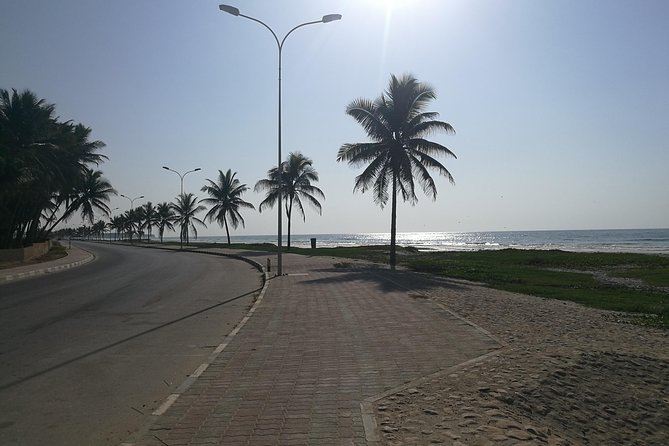
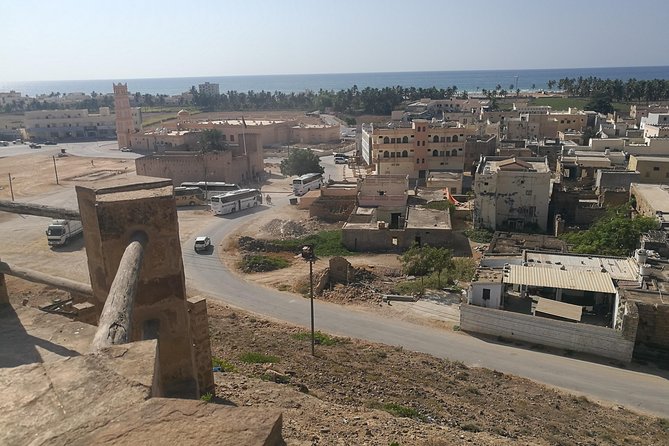
The morning begins in Taqah, an old coastal fishing town east of Salalah. You pass Taqah Beach before reaching Taqah Castle, the former home of the local Wali, or governor.
The castle is now used as a museum. Its displays offer a look at earlier Omani domestic life and local administration, which gives more meaning to the town outside. I find this kind of stop valuable because it helps you understand that Dhofar is not only about palms, waterfalls, and monsoon greenery.
Taqah is also known for dried sardines, rural harvests, and traditional Dhofari mud houses. Those details help place the castle in its setting. It was not an isolated fort built only for display. It belonged to a working town shaped by fishing, farming, and local government.
You have about 45 minutes here, and admission is included. A nearby hillside watchtower, described as an old fort, can also be seen close to the castle.
There is one important practical warning. Taqah Castle is currently under maintenance, so you may not be able to enter or see all of the displays. In that case, the operator says you will receive extra time at the nearby Taqah Cliff viewpoint. Confirm the current condition before booking if the castle is your main reason for choosing this tour.
Taqah Cliff and the Indian Ocean
The next stop moves from local history to open sea. At the end of the Taqah coastline, a rocky cliff rises about 15 meters above the shore and looks toward the Indian Ocean and Taqah.
You get around 20 minutes here. That is enough for photographs, a short pause in the ocean breeze, and a look below the cliff. There is also a good chance of spotting dolphins in the water, although wildlife sightings can never be promised.
This stop works especially well as a break between the castle and Wadi Darbat. You are not expected to take a long walk or complete a difficult activity. The appeal is the view, the air, and the simple pleasure of looking out over the coast.
If Taqah Castle is closed, this viewpoint becomes more important. You should think of it as a scenic substitute, not an equal replacement for the museum. The cliff gives you atmosphere and photographs, while the castle provides cultural context.
Wadi Darbat, the tour’s easiest place to linger
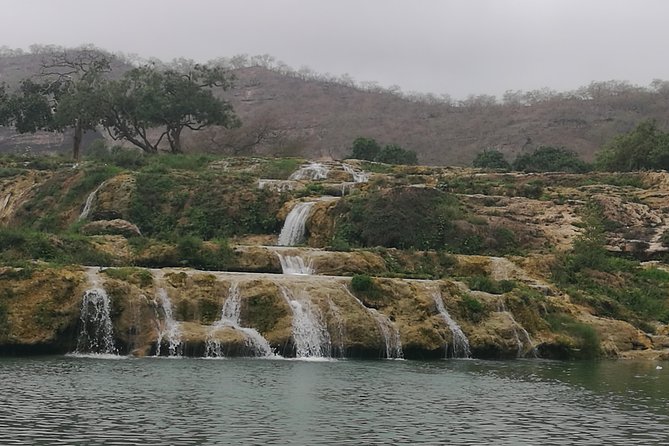
Wadi Darbat is the largest nature stop on the route, with about an hour allotted. The valley is known for a natural spring, an underground water source, a lake, small waterfalls, and seasonal water activities.
Conditions change during the year. After the monsoon period, the valley can offer pedal boats, speedboats, and kayaks. You may also see local herds of camels, cows, and goats around the valley. These details make Wadi Darbat feel less like a single viewpoint and more like a place used by both people and animals.
I would save your appetite for this stop, at least in terms of scenery. It is the part of the tour where you can relax instead of simply stepping out, taking a photo, and getting back in the vehicle. Families may appreciate the open setting and the possible boating options, though the tour does not say that boat activities are included in the price.
The wording about waterfalls needs a little caution. Wadi Darbat is famous for seasonal water, so the amount of water you see will depend on the time of year and recent weather. Do not book this route expecting the same falls and lake conditions in every season.
The hour passes quickly if boats are operating or if you want to take in the valley properly. Since the tour has several later stops, you probably will not have time for a long independent walk. Still, this is the best stop for a slower look at Dhofar’s countryside.
A few more trips and experiences worth a look
- Salalah: Half-Day Guided Tour to Wadi Darbat & Mount Samhan
★ 4.9 · 46 reviews - West Salalah, Al Mughsail Beach, White Beach, Frankincense Tree (Half day Tour)
★ 5.0 · 41 reviews - Explore Samhan Mountain – Half-Day Getaway with Lunch Included.
★ 5.0 · 10 reviews - Half day Salalah City Tour with Souq Visit
★ 5.0 · 3 reviews
Tawi Attair and the Well of Birds
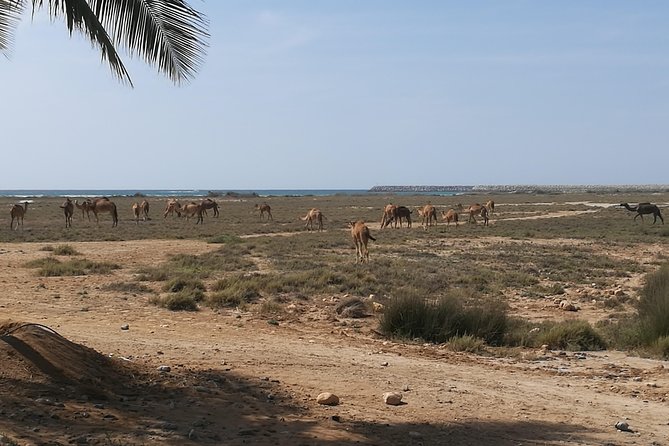
About 20 minutes after Wadi Darbat, the vehicle climbs through open countryside toward Tawi Attair. The name used locally, the Well of Birds, refers to a huge limestone sinkhole.
The formation is about 211 meters deep, roughly the height of a 60-floor building. You spend about 25 minutes at the viewpoint, where birds can be heard and seen around the opening and along the limestone walls.
This is a stop where scale matters. Photographs may not show the full depth, so take a moment to look carefully into the formation. Your guide can explain the geological feature and help you understand what you are seeing.
The viewpoint is the main focus, and the visit is brief. If you want long walks or a full geological excursion, this tour will feel too short. If you like unusual natural formations and want to add one without giving up the rest of the route, Tawi Attair fits well.
Baobab trees on Samhan Mountain
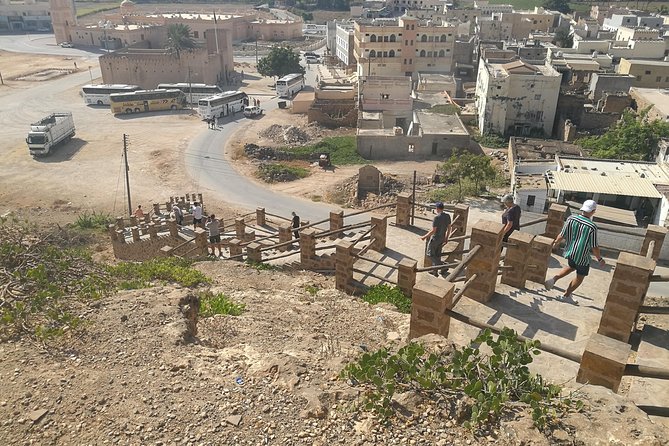
The road then reaches Wadi Hinnah on Samhan Mountain, where you can see giant tabaldi baobab trees. The trees are locally known as Ankiji or Al Mashwa and are also referred to by the scientific name Adansonia digitata.
Dhofar has about 200 baobab trees. Some can reach 25 meters in height and have trunks up to two meters wide. The tree is commonly associated with Africa, particularly Madagascar, so seeing these examples in southern Oman adds a surprising twist to the day.
You get only about 15 minutes here. That is enough for photographs and a close look, but not enough for a long walk through the valley. Keep that timing in mind if the trees are a major priority for you.
I like this stop because it is distinctive without needing a long explanation. The shape of the trunk and branches is immediately memorable, and the setting on Samhan Mountain makes it feel separate from the coastal and valley stops earlier in the morning.
The Samhan gravity point
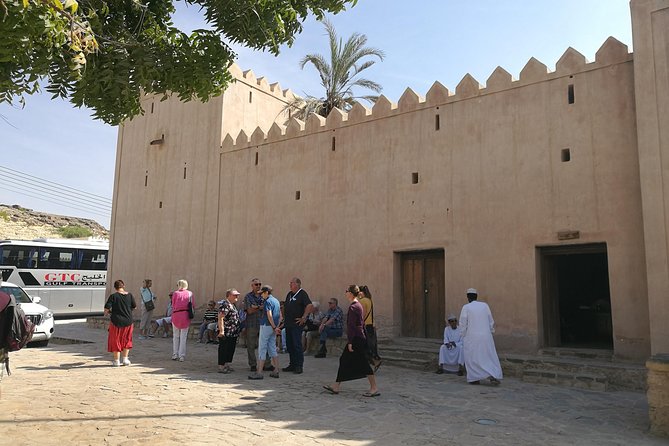
About 15 minutes farther down the Samhan mountain roads, the tour stops at a controversial gravity point. On a bleak stretch of road, you place the vehicle in neutral and it appears to roll uphill.
The experience is a classic roadside mystery. Some people find it fascinating, while others treat it as a visual illusion caused by the surrounding terrain. The tour presents it as a natural phenomenon, but you do not need to settle the scientific argument to enjoy the few minutes of testing it for yourself.
This stop lasts about 15 minutes. It is light, quick, and a little silly in the best way. After several serious historical and natural sights, the apparent uphill roll gives the morning a change of mood.
Keep your expectations in check. This is not a major attraction, and the effect will not occupy much of your day. It works because it is already close to the route, not because it deserves a separate trip.
Sumhuram, the ancient port above Khor Rori
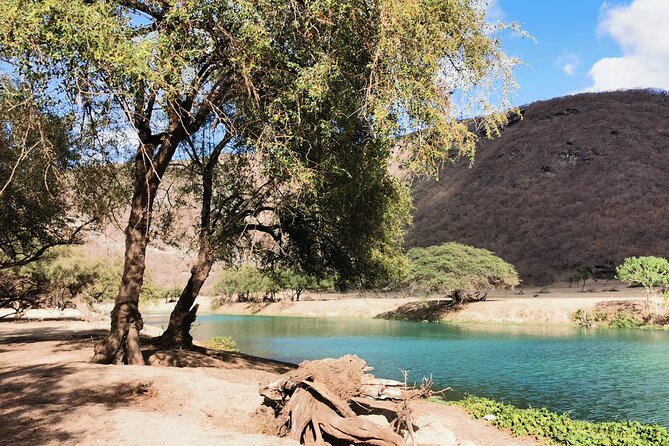
The final stop is Sumhuram Old City, a UNESCO World Heritage site on a small hill overlooking the Indian Ocean. The preserved ruins tell the story of a settlement dating to the fifth century BC and its role as a port linked to Dhofar’s frankincense trade.
This is the tour’s strongest historical site. Taqah Castle shows more recent Omani life, while Sumhuram takes you much farther back, to a period when the coast played a part in long-distance trade.
The ruins sit above the water, so the setting is part of the appeal. You can look across the site, see the remains of the old settlement, and connect the port to the sea below. The location makes it easier to understand why this place mattered.
An information center provides a six-minute video about the city and its ruins. I would make time for it, especially if you are not already familiar with frankincense and Dhofar’s place in that trade. The short film gives useful framing before or after you walk around the remains.
About an hour is allocated here, and admission is included. That is a reasonable amount of time for the ruins and information center, though history lovers may wish for even longer. The tour’s schedule leaves little room to extend the visit, so tell your guide early if Sumhuram is the stop you most want to study.
Guides, vehicles, and the pace of the day
The tour includes a local Arabic and English-speaking guide. The guide helps connect place names, local customs, geology, and history, which is especially useful at Taqah Castle, Tawi Attair, and Sumhuram.
Hamid has received specific praise for showing the main sights and explaining Oman’s history across different time periods. That kind of guiding is valuable here because the tour moves quickly between unrelated subjects. A good explanation keeps the day from becoming a string of disconnected photo stops.
The tour provider is Amazing Salalah Tourism. Service and the guide are the parts most strongly praised, and that matters because the route depends on timing and clear explanations.
Hotel pickup is available, and the vehicle is air-conditioned. Bottled water, fuel surcharge, taxes, and listed entrance fees are included, so you should not face a long list of add-on costs for the core experience.
The four to five-hour duration is efficient but brisk. You will spend only 15 to 25 minutes at several scenic stops, with more time at Wadi Darbat, Taqah Castle, and Sumhuram. I would choose this tour for breadth, not for lingering.
The experience requires good weather. If poor weather causes cancellation, you are offered another date or a full refund. For other cancellations, you need to cancel at least 24 hours before the start time for a full refund.
Who should book this Salalah tour?
I would recommend it to a first-time visitor who wants a broad introduction to eastern Dhofar. You see coast, mountains, countryside, wildlife possibilities, unusual trees, geology, local culture, and archaeology in one outing.
It also suits couples, families, and small private groups who value their own vehicle. People who enjoy taking photographs will find plenty of variety, from the Taqah coast to baobab trunks and the Sumhuram ruins.
The tour is less suitable if you want a slow nature day, a long hike, or a detailed archaeological visit. The schedule is built around seeing many places, not staying at one place for hours.
Anyone mainly interested in Taqah Castle should check its maintenance status first. If it is closed, the extra time at Taqah Cliff will help, but the character of the morning will shift toward scenery.
Should you book East Salalah Highlights?
Book this tour if you want the most variety possible in four to five hours and prefer a private guide over arranging separate taxis or rental-car stops. The combination of Sumhuram, Wadi Darbat, Tawi Attair, and the baobab trees gives you a strong first look at eastern Salalah.
I would hesitate only if $170 per person feels high for a short outing or if you dislike a quick pace. For a small group that values convenience, included transport, and a guide who can explain both Oman’s past and its countryside, the price is easier to justify. Check Taqah Castle’s status before paying, then book at least a day ahead if your schedule is fixed.
FAQ
How long does the East Salalah tour take?
The tour lasts approximately four to five hours.
Is hotel pickup available?
Yes. Hotel pickup is offered for this private experience.
Is Taqah Castle currently open?
Taqah Castle is currently under maintenance. If it remains unavailable, extra time is offered at the nearby Taqah Cliff viewpoint.
What is included in the price?
The price includes bottled water, all fees and taxes, an air-conditioned vehicle, fuel surcharge, listed entrance fees, and a local Arabic or English-speaking guide.
Is this a private tour?
Yes. Only your own group participates in the activity.
What happens if bad weather cancels the tour?
If the experience is canceled because of poor weather, you can choose another date or receive a full refund.
Just added around Salalah
- Salalah East Adventure: Waterfalls, Mountain & Safari★ 5.0 · 3 reviews
- Salalah East Tour (Full Day Tour)★ 5.0 · 3 reviews
- West Coast Mountains and Beaches (Fazayah beach + Shaat cliff)★ 5.0 · 3 reviews
- Salalah: Horse Riding by the Beach★ 4.4 · 3 reviews
- Half day Salalah City Tour with Souq Visit★ 5.0 · 3 reviews
- Salalah: Wadi Darbat, ,Teeq Cave – Baobou Trees Tour★ 4.3 · 3 reviews
- Jebel Safari – Tour della montagna★ 5.0 · 3 reviews
- Empty Quarter & Lost City from Salalah★ 5.0 · 3 reviews
Historical Tours, compared.

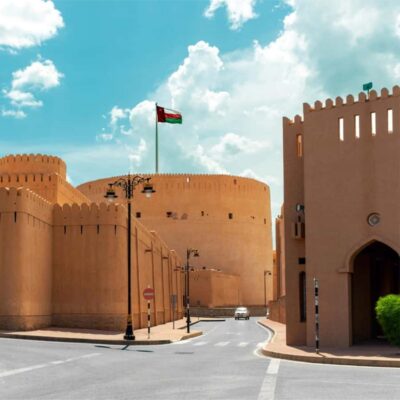
Nizwa Heritage & Culture Full Day Tour with Audio Guiding
Read our review →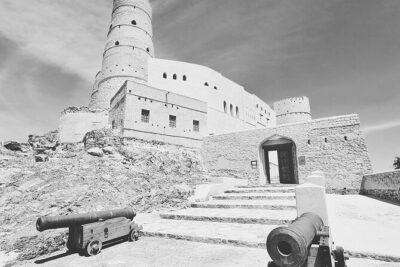
Private Historical Tour – Nizwa Fort – Nizwa Souq – Bahla Fort – Jabreen Castle
Read our review →

Salalah City Tour with History, Culture, Souq Shopping, Halwa
Read our review →
Nizwa Heritage & Jebel Shams Canyon – Private Tour from Muscat
Read our review →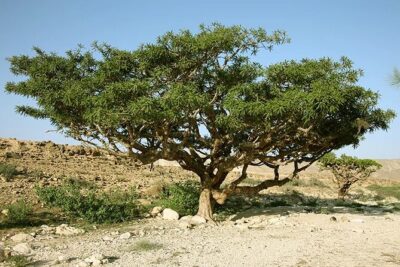
Browse the lists this tour appears in