
Reviewed · SALALAH TOURS
Enjoy a Full-Day Tour Uncovering East Salalah’s Hidden Gems
East Salalah rewards a full day. This private outing links Taqah’s coast and castle with Wadi Darbat, mountain viewpoints, rare baobab trees, and the ancient port of Sumhuram. I like the wide mix of nature and culture, and I like that guides such as Hamid and Hafez are praised for clear English, careful driving, and flexible planning. The main drawback is a busy schedule, especially if you want long walks or extra time at every stop.
I also like the personal format. Your group rides in an air-conditioned vehicle with bottled water, a local Arabic and English-speaking guide, and private transport rather than sharing the day with strangers. Keep in mind that Taqah Castle is currently under maintenance, so the visit may be replaced with additional time at the nearby cliff viewpoint.
In This Review
- Key points to know before booking
- Why this East Salalah tour works so well
- Taqah Beach begins the day beside the Arabian Sea
- Taqah Castle explains the town’s older way of life
- Taqah Cliff Viewpoint opens up the coastline
- Wadi Darbat is the natural centerpiece
- Tawi Attair drops 211 meters into the mountain
- Gravity Point adds a little harmless trickery
- Hinnah Valley reveals Dhofar’s rare baobab trees
- Sumhuram ends the day with ancient trade
- What the private vehicle and guide service add
- Is $207 good value for this day?
- Who should book this Salalah experience?
- Should you book it?
- FAQ
- How long does the East Salalah tour last?
- Is hotel pickup available?
- Is this a private tour?
- What type of vehicle is used?
- Is Taqah Castle open?
- Does the tour include entrance fees and water?
- Is the tour suitable for everyone?
Key points to know before booking
- Taqah combines a fishing town, sandy beach, castle, farms, and sea views in the opening part of the day.
- Wadi Darbat changes with the season, offering waterfalls, pools, streams, and possible boating after the monsoon.
- Tawi Attair is a dramatic 211-meter sinkhole, with birds nesting in the limestone walls.
- The Gravity Point stop is a playful roadside puzzle, where a vehicle in neutral appears to roll uphill.
- Hinnah Valley has rare baobab trees, some reaching about 25 meters high.
- Sumhuram adds real archaeological depth, linking the tour to Dhofar’s ancient frankincense trade.
Why this East Salalah tour works so well
Salalah is not only a beach destination. The Dhofar region shifts quickly from palm-lined coast to green valleys, high mountain roads, limestone formations, and ancient trading sites. This tour gives you a useful first look at that variety in roughly six to eight hours.
The route also has a good rhythm. You begin beside the sea, move through Taqah’s cultural sites, head into the mountains, stop at unusual natural formations, and finish with archaeology. That order helps the day feel like a journey rather than a string of unrelated photo stops.
I would allow most of a day for the experience. A typical schedule described for this tour runs from around 9 a.m. to 6 p.m., though the advertised duration is approximately six to eight hours. Exact timing can change with road conditions, weather, walking pace, and how much time your group spends at each stop.
The private format matters here. You can ask Hamid, Hafez, or another assigned guide to adjust the pace, spend longer at a viewpoint, or help with a family member on a rougher path. Previous outings have also included adjustments for families with young children and extra scenic stops when time allowed, but you should treat those additions as goodwill, not a guaranteed part of the package.
A few more trips and experiences worth a look
- Full Day Guided Salalah a Combination of East and West tour
★ 5.0 · 20 reviews - Explore West Salalah’s Stunning Natural Scenery – a Full-Day Tour
★ 5.0 · 20 reviews - Desert Safari Trip Full Day & Ubar Lost city
★ 5.0 · 18 reviews
Taqah Beach begins the day beside the Arabian Sea
The first stop is Taqah Beach, a broad sandy shore lined with tall palms. It is a short 15-minute visit, so think of it as an introduction to the coast rather than a beach day.
The appeal is simple. You get sea air, open views, and a glimpse of Taqah’s coastal character before heading into town. Dolphins are sometimes seen near the shore, although sightings are not promised. The water, palms, and sunlight can make this a fine place for quick photographs.
Do not expect a long swim or a slow afternoon by the water. Fifteen minutes passes quickly, and the tour has many stops ahead. If you need photographs, have your camera ready before leaving the vehicle.
Taqah Castle explains the town’s older way of life
From the beach, the route enters Taqah, a former fishing town known for dried sardines, farming, and traditional Dhofari mud houses. The town gives useful context to the scenery. You are not just passing through a coastal settlement, you are seeing a place shaped by fishing, small-scale agriculture, and local administration.
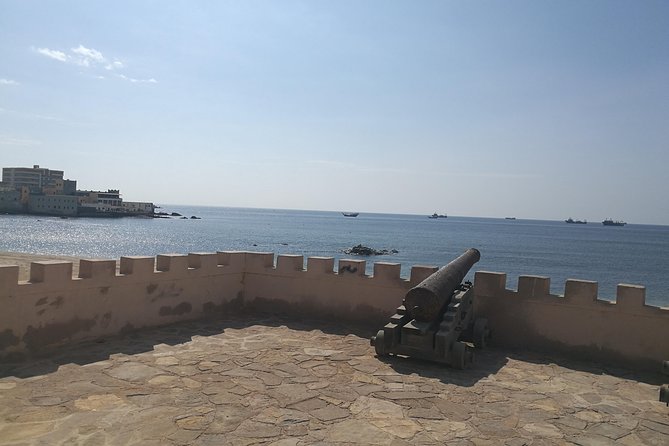
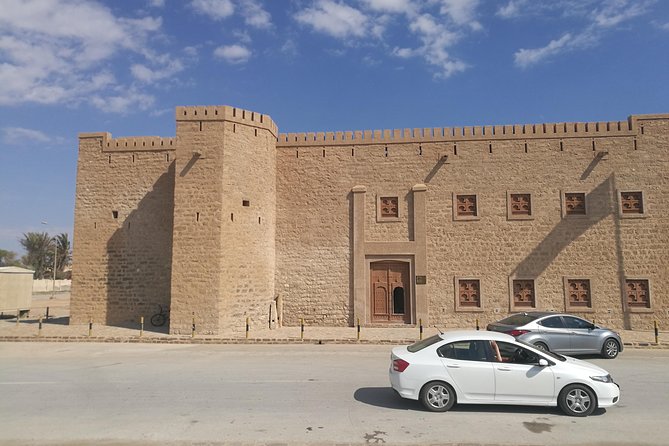
Taqah Castle was formerly the home of the wali, or governor. It is used as a museum when open, with displays about the town and local life. A nearby watchtower and old fort on the hill add another layer to the visit.
There is an important current limitation: the castle is under maintenance. Because of that, access may not be available during your visit. The operator says you will receive extra time at Taqah Cliff Viewpoint instead. If the castle is a major reason you booked, confirm its operating status before departure. The replacement viewpoint is worthwhile, but it is not the same as walking through a historic home and museum.
The scheduled stop is about one hour, including the town and castle area. That gives you time to listen, take photographs, and see how Taqah fits into Dhofar’s past.
Taqah Cliff Viewpoint opens up the coastline
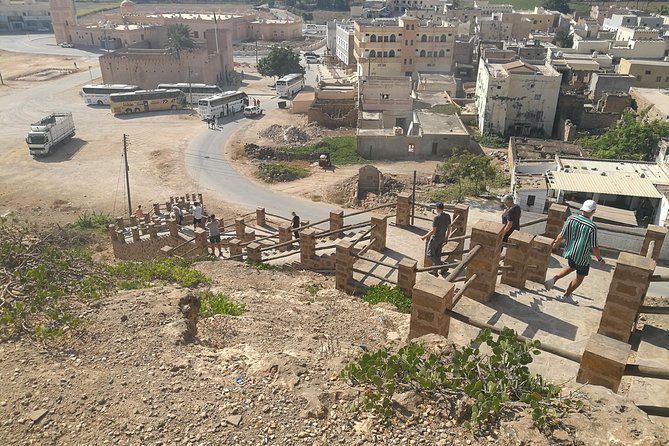
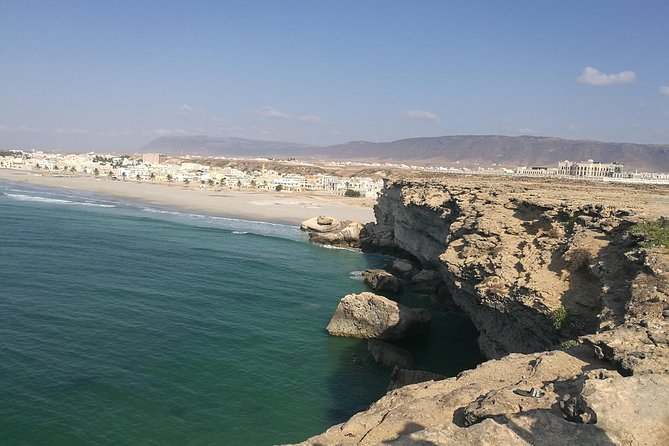
The cliff viewpoint offers a broad look over the Indian Ocean and the rocky coast. From above, the meeting of steep cliffs and blue water creates one of the day’s strongest photo settings.
This is also a practical replacement for the castle while maintenance continues. The usual stop lasts about 15 minutes, but extra time may be added if the castle cannot be visited.
The viewpoint is scenic rather than interpretive. Your guide can explain the area, but the main experience is the view itself. Hold onto hats and loose items, and stay well back from the edge. The tour information does not describe safety barriers or extended walking here, so use ordinary care at a cliff site.
Something different, still within reach of Salalah:
- East Salalah Mountain Safari, Wadi Darbat, Beach, Camels, Dunes
★ 5.0 · 206 reviews - Salalah: Wadi Darbat, Jabal Samhan, Baobab, Mirbat Sand Dune
★ 4.6 · 178 reviews - Mountain Safari Private Tour
★ 5.0 · 105 reviews - Sunset Desert Safari Salalah Tour in Rub Al Khali – Empty Quarter
★ 5.0 · 91 reviews
Wadi Darbat is the natural centerpiece
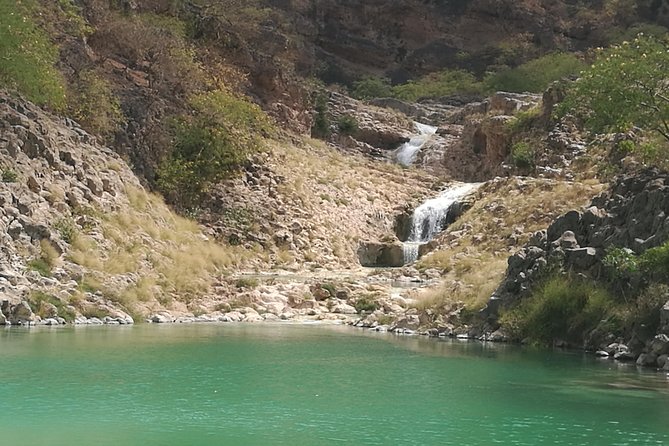
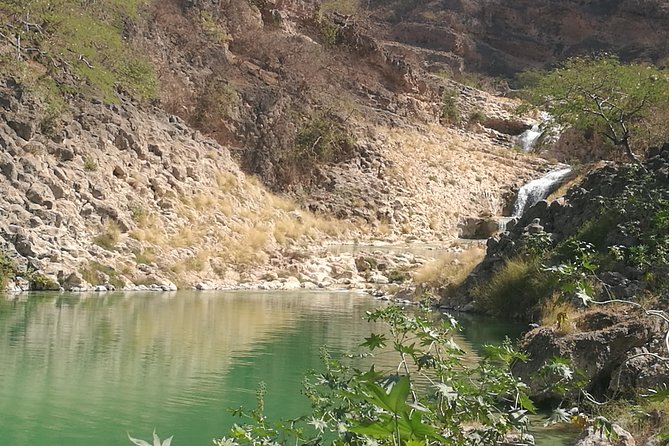
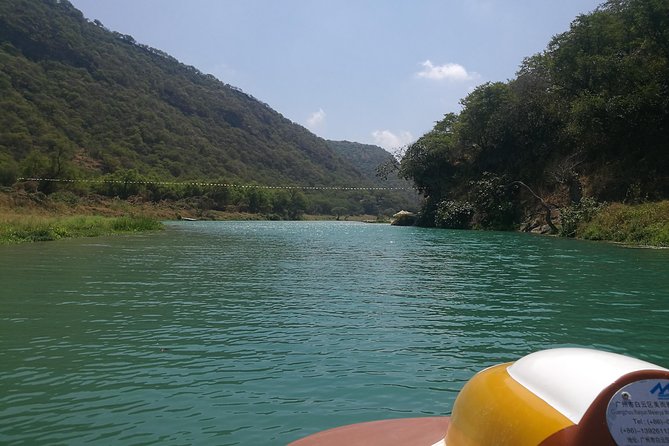
Wadi Darbat is likely to be the day’s main attraction. This valley is known for seasonal waterfalls, small cascades, pools, and a spring-fed lake formed by underground water. After the monsoon, the water features are often at their most impressive.
The setting changes throughout the year. During wetter periods, you might see flowing falls, streams, and enough water for pedal boats, speedboats, or kayaks. At other times, the valley may be quieter and drier. The tour information specifically connects the strongest water activity with the period after the monsoon, so plan your expectations around the season.
The valley is also a place for animal watching. Camels, goats, and cattle belonging to local people are often seen nearby. That combination of water, trees, open ground, and grazing animals gives Wadi Darbat a distinctly local feel. It is not simply a viewpoint built for tourists.
The scheduled stop is about one hour. Families often appreciate the open setting, and one guide was praised for helping children along more difficult paths. Still, the stop is not presented as a full hiking excursion. If you hope to walk far up the valley, swim, or use a boat, ask how much time and which activities are available on your date.
Tawi Attair drops 211 meters into the mountain
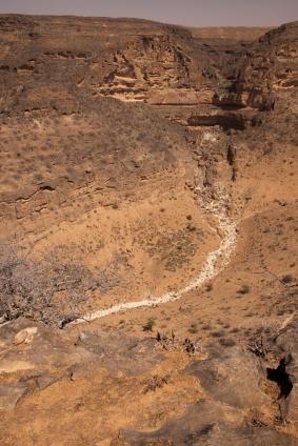
After Wadi Darbat, the route climbs through the open countryside around mountain settlements to Tawi Attair, known locally as the well of birds. The sinkhole reaches about 211 meters deep, roughly the height of a 60-story building.
You view the formation from a designated viewpoint while your guide explains how the limestone opening formed and why birds gather there. Bird calls can echo around the walls, giving the place an atmosphere that is quite different from the coast and valley below.
This is a 30-minute stop, which is enough to see the opening and take photographs. It is not a place for casual wandering. Stay at the viewing area and follow your guide’s instructions, especially around the edge.
The drive itself is part of the attraction. The road climbs from Darbat into the high country, bringing broad views and a sense of how quickly Dhofar changes above the coast. If you are sensitive to winding mountain roads, ask your guide about the route and take breaks as needed.
Gravity Point adds a little harmless trickery
The Gravity Point stop is one of the tour’s lighter moments. On a sloping stretch of road, your vehicle is placed in neutral and appears to roll uphill, against what your eyes expect.
The stop lasts about 25 minutes. It is easy to enjoy because you do not need a hike or specialist knowledge. You simply watch the effect, try it for yourself with the guide’s help, and decide whether the road is fooling your sense of direction.
The description calls it a natural phenomenon, but the experience is best treated as an optical and topographic curiosity rather than a scientific lecture. The fun is in testing your own judgment. It also breaks up the more serious cultural and natural stops.
Hinnah Valley reveals Dhofar’s rare baobab trees
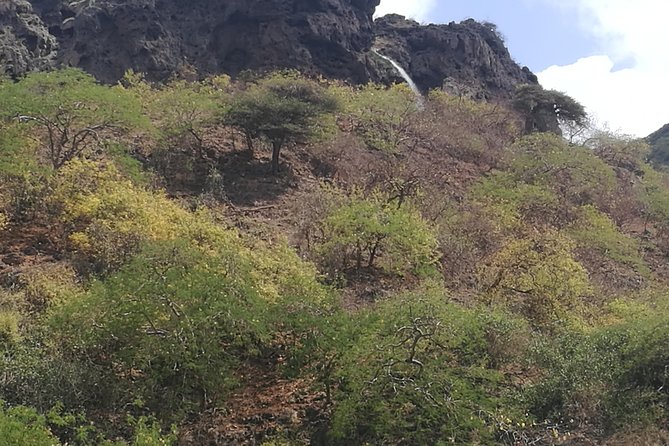
Hinnah Valley is home to unusual Tabaldi baobab trees, locally called Ankiji or Al Mashwa. The tour explains that roughly 200 baobabs grow in Dhofar, with some reaching 25 meters in height and trunks up to two meters wide.
Baobabs are strongly associated with Africa, especially Madagascar, so seeing them in Oman is one of the most distinctive parts of this route. Their thick trunks and unusual shapes make them excellent subjects for photographs, but the bigger value is ecological. You are seeing a rare local habitat rather than a standard desert tree collection.
The stop takes about 30 minutes. There may be a short walk, and the information says some physical effort is required at the baobab valley. Wear shoes that are comfortable on uneven ground, and do not plan on making this a long independent hike.
The trees are easy to appreciate without rushing, but the scheduled time is fairly short. If you are especially interested in plants or photography, ask whether the group can spend a little longer here.
Sumhuram ends the day with ancient trade
The final stop is Sumhuram Old City, an archaeological site registered as part of a UNESCO World Heritage area. The ruins sit on a small hill overlooking the Indian Ocean and date back several centuries before the Common Era.
Sumhuram was an important port in Dhofar’s frankincense trade. That connection gives the ruins real meaning. Frankincense was not a minor local product. It linked southern Arabia with wider trading networks, and Sumhuram’s position near the coast helps explain why this settlement mattered.
The site includes preserved remains and an information center with a six-minute film. The film is useful because it gives you a quick framework before you inspect the ruins. Without that context, old stone walls can blur together. With it, you can better understand the city’s purpose and place in regional trade.
Plan for about 30 minutes. There are stairs and some walking, so this is one of the stops where the tour requires slight physical effort. The final setting is especially appealing because you can look from the ruins toward the sea and connect the old port with the coast you saw at the start of the day.
What the private vehicle and guide service add
The tour includes an air-conditioned vehicle, private transportation, bottled water, admission fees, and an Arabic and English-speaking local guide. Vehicle arrangements depend on group size:
- One to three adults use a two-wheel-drive vehicle.
- Four to six adults use a four-wheel-drive vehicle.
- Seven to nine adults use two four-wheel-drive vehicles with one guide and two drivers.
That setup is useful because the route includes mountain roads and rural areas. A four-wheel-drive vehicle is assigned for larger groups, but the provided details do not say that every road requires four-wheel drive.
The guide can make a major difference. Hamid is repeatedly praised for arriving early, driving carefully, explaining Omani culture and history clearly, and helping families with children. Hafez is also described as friendly and well informed. English ability has been praised, which matters when the tour covers geology, local customs, architecture, and ancient trade in one day.
You are also paying for local interpretation, not only transport. A driver can take you to Wadi Darbat, but a good guide can explain the dried sardines of Taqah, the role of the wali, the baobab trees, and the frankincense route.
Is $207 good value for this day?
At $207 per person, this is not a budget sightseeing shuttle. The value depends heavily on group size and what you would otherwise need to arrange yourself.
You receive private transport, an air-conditioned vehicle, a local guide, bottled water, and site admission fees. The tour also covers a wide area in one day, from the coast to the mountains and back to an archaeological site. For a couple or small family that wants a private day without arranging several separate drives, the price can be reasonable.
Group discounts are offered, which improves the calculation for larger parties. The cost also includes the convenience of having the route organized and the flexibility of a private group. Food and any activities not specifically included are extra, so budget separately for meals, boating, or other personal purchases.
The best value comes when you want interpretation and ease. If you prefer to spend an hour at one waterfall or wander slowly through an archaeological site, the fixed schedule may feel expensive. If you want to see the main sights of East Salalah in one efficient day, the coverage is strong.
Who should book this Salalah experience?
I would recommend this tour to first-time visitors who have limited time in Dhofar and want more than beaches. It suits families, couples, and small private groups who value a guide and do not want to manage mountain roads themselves.
It is also a good fit for photographers. You get palms and sea at Taqah, waterfalls and animals at Wadi Darbat, a huge sinkhole, an optical road puzzle, baobab trees, and coastal ruins. Few single-day outings offer such varied subjects.
You should think twice if you dislike moving between many stops or have difficulty with stairs, uneven paths, or mountain roads. Most people can participate, but the baobab valley and Sumhuram include some walking and climbing. The tour also depends on good weather. If poor conditions force cancellation, you are offered another date or a full refund.
Free cancellation is available when you cancel at least 24 hours before the start time. Changes made inside that 24-hour window are not accepted, and the local time in Salalah controls the deadline.
Should you book it?
Book this tour if you want a broad, private introduction to East Salalah, especially during a short stay. The strongest reasons are the range of scenery, the rare baobab trees, Wadi Darbat’s seasonal water, and the closing visit to Sumhuram.
Before paying, confirm the current status of Taqah Castle and ask how much time your group can expect at Wadi Darbat. If you accept a full schedule and modest walking, this is a well-rounded way to see the coast, mountains, wildlife, unusual geology, and ancient trade routes in one day.
FAQ
How long does the East Salalah tour last?
The tour lasts approximately six to eight hours. A typical day may run from around 9 a.m. to 6 p.m., depending on timing and conditions.
Is hotel pickup available?
Pickup is offered as part of the experience. The tour uses private transportation for your group.
Is this a private tour?
Yes. Only your own group participates in the activity.
What type of vehicle is used?
One to three adults use a two-wheel-drive vehicle. Four to six adults use a four-wheel-drive vehicle. Groups of seven to nine adults use two four-wheel-drive vehicles with one guide and two drivers.
Is Taqah Castle open?
Taqah Castle is currently under maintenance. If it is unavailable, extra time is offered at the nearby Taqah Cliff Viewpoint.
Does the tour include entrance fees and water?
Yes. Site admission fees, bottled water, an air-conditioned vehicle, private transport, and a local Arabic and English-speaking guide are included.
Is the tour suitable for everyone?
Most people can participate, but some stops require slight physical effort, including walking and climbing stairs at the archaeological site and baobab valley. The experience also requires good weather.
Just added around Salalah
- Salalah East Adventure: Waterfalls, Mountain & Safari★ 5.0 · 3 reviews
- Salalah East Tour (Full Day Tour)★ 5.0 · 3 reviews
- West Coast Mountains and Beaches (Fazayah beach + Shaat cliff)★ 5.0 · 3 reviews
- Salalah: Horse Riding by the Beach★ 4.4 · 3 reviews
- Half day Salalah City Tour with Souq Visit★ 5.0 · 3 reviews
- Salalah: Wadi Darbat, ,Teeq Cave – Baobou Trees Tour★ 4.3 · 3 reviews
- Jebel Safari – Tour della montagna★ 5.0 · 3 reviews
- Empty Quarter & Lost City from Salalah★ 5.0 · 3 reviews
Salalah Tours, compared.
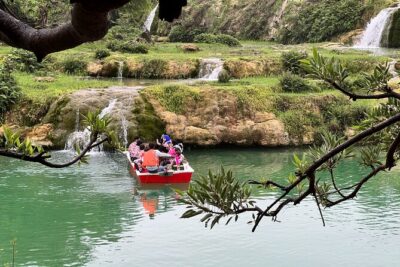
East Salalah Mountain Safari, Wadi Darbat, Beach, Camels, Dunes
Read our review →
Wadi Darbat, Jabal Samhan, Baobab, Mirbat Sand Dune
Read our review →
Sunset Desert Safari Salalah Tour in Rub Al Khali – Empty Quarter
Read our review →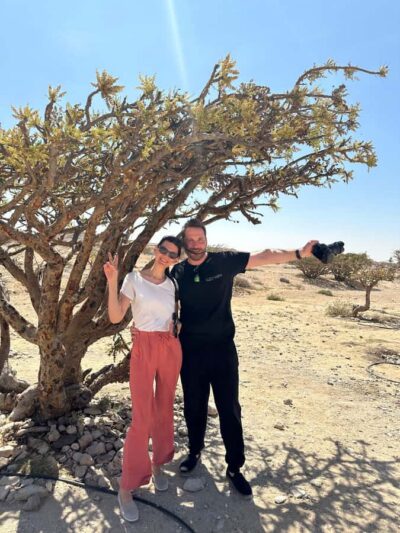
Sunset Desert Safari – Rub Al Khali – Empty Quarter
Read our review →
West Salalah Tour – Caribbean of Orient – Fazayah Beach with City
Read our review →
Salalah City Tour: Discover the Best of Oman’s Coastal Gem
Read our review →
Sunset desert safari tour in Salalah(private tour)
Read our review →Browse the lists this tour appears in