
Reviewed · EMPTY QUARTER EXPEDITIONS
Empty Quarter Desert Sunset tour
Salalah’s desert has a long memory. I like the way this private 8-hour outing joins Oman’s frankincense heritage with the vast Empty Quarter, and I like the personal touch from guides such as Mohammed, Alawi, and Abdullah. The main drawback is the long day in a hot, open environment, with much of the appeal depending on clear weather and a dramatic sunset.
You’ll visit Wadi Dawkha, the archaeological site of Ubar, and the giant dunes near Salalah. Some outings also include baby camels, fresh camel milk, and a 4×4 ride over the dunes, but you should confirm those details when booking rather than treat every extra as guaranteed.
In This Review
- Key points to know before booking
- Why this Salalah desert day is more than a sunset drive
- Wadi Dawkha and Oman’s frankincense trees
- Ubar, the desert city linked to trade
- The Empty Quarter and its enormous dunes
- Camel encounters and the human touch
- What the eight-hour schedule feels like
- How the guide affects the experience
- Is $152.10 per person fair value?
- Who should book this desert experience?
- Should you book the Empty Quarter Sunset tour?
- FAQ
- Where does the Empty Quarter Desert Sunset tour take place?
- How long does the tour last?
- How much does the tour cost?
- Is hotel or location pickup available?
- Is this a private tour?
- What is included at Wadi Dawkha?
- What can I see at Ubar?
- What is special about the Empty Quarter?
- Can most people participate?
- What happens if the weather is poor?
Key points to know before booking
- Frankincense trees at a UNESCO site: Wadi Dawkha protects Boswellia sacra trees, the source of Oman’s famous frankincense resin.
- Ubar adds a historical layer: The ruins are linked to a legendary settlement connected with old frankincense trade routes.
- Empty Quarter sunset: You reach one of the world’s largest sand deserts for sweeping dunes, fading light, and strong photographs.
- Private touring matters: Only your group takes part, so the guide can adjust the pace and respond to your needs.
- Family-friendly extras: Baby camels, camel milk, turbans for photographs, and dune driving have all been part of reported outings.
- Good cancellation terms: You can cancel for a full refund up to 24 hours before the start, except that poor weather may lead to a new date or refund.
Why this Salalah desert day is more than a sunset drive
Many desert tours reduce Oman to sand, speed, and a few photographs. This one gives the dunes a wider setting. You start with the trees that helped make southern Oman famous, continue to a lost settlement tied to ancient commerce, and finish in the Rub’ al Khali, or Empty Quarter.
That progression gives the day a useful sense of place. You are not simply driven away from Salalah to watch the sky turn orange. You get a look at the natural resource that shaped the region, the trade routes that carried it abroad, and the desert that still defines much of the interior.
The private format is a real advantage. You are not working around a large coach group or waiting for strangers to finish photographs. If you are traveling with children, an older parent, or a keen photographer, that flexibility can make the long drive feel easier.
The tour costs $152.10 per person, which is not a bargain for a simple beach outing. The value improves if you are traveling as a small private group and want transport, guiding, several major stops, and a desert sunset in one day. It is less attractive if you only want a quick dune visit or already have a rental car and a separate plan for the region.
More Empty Quarter expeditions:
- Sunset Desert Safari Salalah Tour in Rub Al Khali – Empty Quarter
★ 5.0 · 91 reviews - Salalah: Sunset Desert Safari – Rub Al Khali – Empty Quarter
★ 4.6 · 79 reviews - Desert Safari, Sunset & Sand Bashing (Rub Al Khali Desert)
★ 5.0 · 44 reviews
Wadi Dawkha and Oman’s frankincense trees
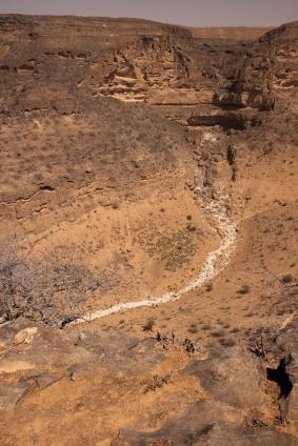
The first major stop is Wadi Dawkha, about two hours in the stated schedule. It forms part of the Land of Frankincense World Heritage property and protects a large number of Boswellia sacra trees.
These are not tall forest trees. Frankincense trees are distinctive, tough plants adapted to dry ground. Their resin has been used in religious ceremonies, perfume, traditional medicine, and trade for centuries. That makes the stop valuable even if you are not a keen botanist. You begin to understand why this part of Oman mattered to merchants far beyond the Arabian Peninsula.
I would give this stop proper attention rather than treating it as a quick photo pause. Look at the shape of the trees and the harsh ground around them. The setting helps explain why frankincense was precious: a useful and prized substance came from a plant growing in a demanding environment.
The phrase Frankincense Park can sound like a landscaped public garden, but Wadi Dawkha is better understood as a protected reserve. Do not expect cafés, amusement-style facilities, or a polished park experience. Its attraction is the trees, the setting, and the connection to Oman’s past.
The two-hour allocation should also tell you something about the pace. This is not an itinerary built entirely around rushing from one viewpoint to the next. You have time to hear the guide explain the trees and their place in southern Oman.
Ubar, the desert city linked to trade
The next stop is Ubar, with about three hours assigned to the archaeological site. Ubar is often connected with a legendary city described in ancient texts. The remains include traces of buildings, walls, and wells, suggesting a settlement involved in trade and contact with other communities.
The site is interesting partly because it sits between legend and archaeology. You are not being shown a perfectly preserved city with streets and intact houses. Instead, you see physical remains and consider what they reveal about a settlement that once depended on movement across difficult country.
Frankincense gives Ubar its wider meaning. The resin was not just gathered and used locally. It moved along old routes, supporting trade and linking southern Oman with distant markets. Ubar offers a chance to picture the people, animals, wells, and supplies needed to keep that commerce moving.
A guide makes a difference here. Mohammed is repeatedly praised for explaining the places rather than acting only as a driver, while Alawi and Abdullah are also named as attentive members of the guiding team. That personal explanation matters at an archaeological site where the remains may be modest at first glance.
You should set your expectations sensibly. Ubar is a place for context and imagination, not a giant ruin complex. If you want grand columns and extensive restored walls, the site may feel quiet. If you enjoy questions about trade, archaeology, and the line between story and evidence, it adds real substance to the day.
The Empty Quarter and its enormous dunes
The final part brings you into the Empty Quarter, also called the Rub’ al Khali. This immense sand desert reaches across Oman, Saudi Arabia, Yemen, and the United Arab Emirates. The portion near Salalah offers a sharp change from the frankincense reserve and archaeological site.
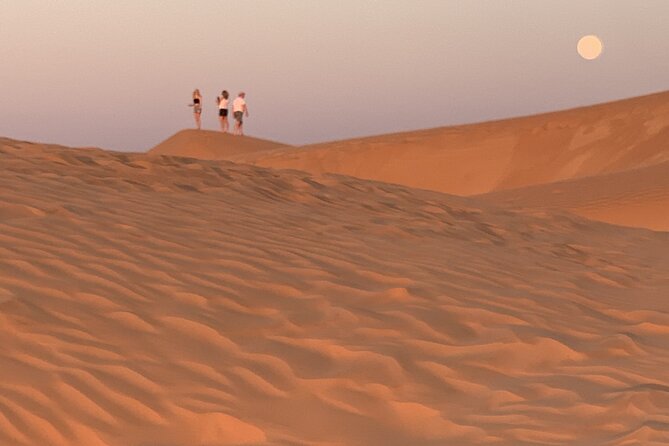
The dunes here are on a different scale from the smaller sandy areas you may see closer to town. Some reach about 800 feet, or 240 meters, and extend for miles. Their size is the main event. You can look across repeated ridges of sand with very little to interrupt the view.
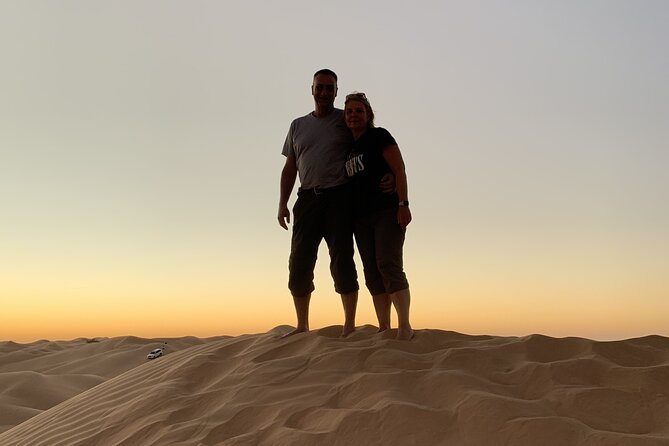
The desert changes color and character as the sun drops. Bright sand can turn gold, copper, rose, and muted brown within a short time. The ridges also create strong lines and shadows, which is why this outing works well for photography even if you are not carrying specialist equipment.
A 4×4 ride over the dunes has been part of several outings, and it adds a little excitement before the quiet sunset. The contrast is pleasant: a burst of movement on the sand, followed by time to stop, take photographs, and watch the light fade.
Still, dune driving is not the whole point. I would not book this tour only for an extended off-road thrill, because the advertised experience is built around the full route and sunset. The Empty Quarter is most memorable when you allow yourself to look around rather than spend every minute recording the ride.
The open setting also means conditions matter. Wind can shift the sand and affect visibility. Poor weather can lead to a different date or a full refund, which is useful protection for a sunset-focused activity.
A few more trips and experiences worth a look
- Sunset desert safari tour in Salalah(private tour)
★ 5.0 · 58 reviews - Magical Night Stay in Rub Al Khali Empty Quarter Desert Salalah
★ 5.0 · 35 reviews - Salalah: Sunset desert safari tour in salalah(private tour)
★ 4.9 · 21 reviews - Desert Sunset Magic – Salalah Empty Quarter Experience
★ 5.0 · 19 reviews
Camel encounters and the human touch
Several outings connected with this desert experience have included a camel farm, baby camels, and a taste of fresh camel milk. For families, this may be one of the most memorable parts of the day. Children often respond more immediately to a young camel than to an archaeological explanation, and the stop gives the desert a living presence.
You should confirm the camel visit and milk tasting before you go, since the core schedule specifically names Wadi Dawkha, Ubar, and the Empty Quarter. These extras appear to depend on how the day is arranged.
The guides also add small personal touches. Mohammed has made turbans for photographs, and several outings included help with pictures and videos. That may sound minor, but it can turn a standard stop into a shared moment, especially if you are traveling with family or want a group photograph without asking strangers for help.
The strongest praise is directed at the guides’ warmth, patience, and attention to individual needs. One outing with a parent and adult child was adjusted to suit them, and hotel pickup was reported as punctual. Those details suggest a service style based on care rather than simply following a fixed route.
Because this is a private tour, you have a better chance of asking questions, pausing for photographs, or spending less time at a stop that does not interest you. The exact amount of flexibility will depend on the day and the guide, but the format is well suited to personal adjustments.
What the eight-hour schedule feels like
The stated duration is approximately eight hours. The three listed stops account for roughly two hours at Wadi Dawkha, three hours at Ubar, and three hours in the Empty Quarter. That is a full day, especially once driving between locations is taken into account.
You should wear clothing that works for heat, sun, and sand. Bring water, sun protection, and shoes that are comfortable on uneven ground. A light layer can also be useful later, since desert temperatures may feel different after sunset, though no specific clothing requirement is given.
The tour offers pickup, and several outings used an air-conditioned car for the longer road sections. That is important in Dhofar, where the distance between Salalah and the desert sites can make a self-drive day tiring. You can focus on the scenery and conversation instead of navigation.
A mobile ticket keeps the booking simple. Confirmation is provided at booking, and most people can participate. Since this is a private activity, the group size is your own party rather than a mixed excursion.
The tour is booked, on average, 18 days ahead. That is a useful planning clue, particularly if you want a certain sunset date or are visiting Salalah during a busy period. I would not leave it until the final day of your trip.
How the guide affects the experience
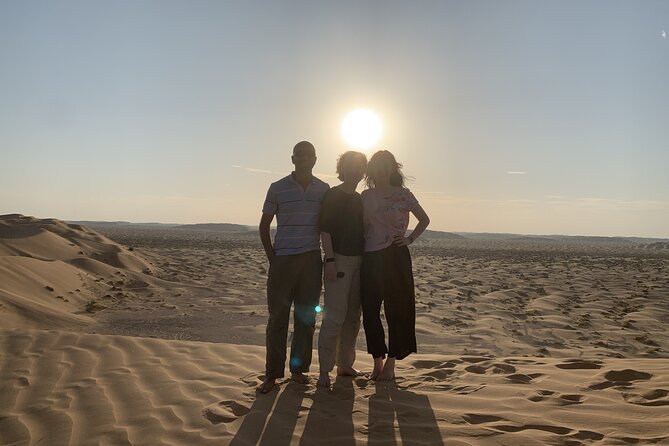
A good desert guide does more than point out a dune. The guide needs to connect the trees, ruins, trade routes, and sand into one story. The best accounts of this outing describe Mohammed as professional, friendly, patient, and willing to explain what you are seeing.
Alawi and Abdullah are also named as guides who helped make the day comfortable. You may not receive the same person, so it is sensible to regard the named guides as examples of the team rather than a promise that one particular guide will lead your tour.
The distinction between guide and driver matters here. You spend hours on the road, and the sites at Wadi Dawkha and Ubar benefit from explanation. At the same time, the private format gives you room to communicate what you want from the day, from more photographs to a gentler pace.
The service is especially suited to families. A child can enjoy camels and dune driving while adults get the historical and cultural background. It also works for couples and small groups who prefer an unhurried day without a fixed public timetable.
Is $152.10 per person fair value?
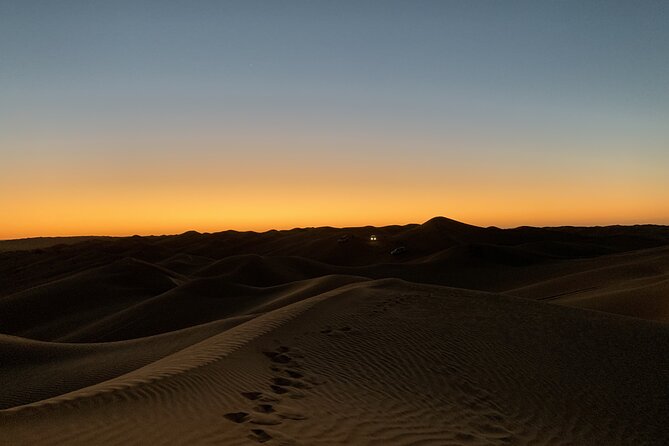
At $152.10 per person, this tour should be judged as a private full-day experience, not as a simple transfer to a viewpoint. The price covers an approximately eight-hour outing with pickup, a guide, three major stops, and the benefit of having only your group participate.
The value is strongest when:
- You do not want to drive long desert roads yourself.
- You want a guide to explain frankincense and Ubar.
- You care about a private schedule.
- You want a sunset in the Empty Quarter rather than a short local excursion.
- You are traveling with family and would appreciate help with photographs and pacing.
The value is weaker if you are comparing it with a large group bus tour or only want dune photos. A lower-priced shared trip may suit a strict budget, though it is unlikely to offer the same control over timing and conversation.
I also like that the cancellation policy reduces some risk. You can cancel at least 24 hours before the start for a full refund. Changes or cancellations inside that window are not accepted for a refund, and all times follow local time in Oman.
Who should book this desert experience?
I would recommend it to anyone who wants the Empty Quarter to be part of a wider Salalah story. It suits first-time visitors who want several important sights in one day, families looking for camels and an easy private arrangement, and photographers who want open dunes at sunset.
It is also a good choice if you have already seen Oman’s Wahiba Sands. One account specifically noted that the Empty Quarter felt different from Wahiba Sands, which is a useful comparison. The dunes here are known for their scale and broad, empty views.
I would hesitate if you dislike long days in a vehicle, hot conditions, or places where the main attraction is natural space rather than built facilities. Ubar is not a conventional monument, and Wadi Dawkha is a reserve rather than a recreational park.
Should you book the Empty Quarter Sunset tour?
Book it if you want nature, archaeology, frankincense, camels, and sunset in one private day. The route has a clear rhythm, and the guide’s personal attention appears to be one of its strongest features.
Before paying, confirm the pickup point, the assigned guide, and whether the camel farm, milk tasting, and 4×4 dune ride are included on your date. If the answer is yes, $152.10 can be fair value for a small group seeking a flexible, well-rounded day beyond Salalah.
FAQ
Where does the Empty Quarter Desert Sunset tour take place?
The tour operates from Salalah, Oman, and visits Wadi Dawkha, the Ubar Archaeological Site, and the Empty Quarter.
How long does the tour last?
The experience lasts approximately eight hours.
How much does the tour cost?
The listed price is $152.10 per person.
Is hotel or location pickup available?
Pickup is offered as part of the experience.
Is this a private tour?
Yes. Only your group participates in the activity.
What is included at Wadi Dawkha?
Wadi Dawkha is a protected frankincense tree reserve and part of the Land of Frankincense World Heritage property. The site is home to Boswellia sacra trees.
What can I see at Ubar?
The Ubar site includes remains of buildings, walls, and wells. It is associated with a legendary settlement and old frankincense trade routes.
What is special about the Empty Quarter?
The Empty Quarter is one of the world’s largest continuous sand deserts. Its dunes can reach about 800 feet, or 240 meters, and extend across parts of several countries.
Can most people participate?
Yes. The experience information states that most people can participate.
What happens if the weather is poor?
The experience requires good weather. If it is canceled because of poor weather, you will be offered another date or a full refund.
Just added around Salalah
- Salalah East Adventure: Waterfalls, Mountain & Safari★ 5.0 · 3 reviews
- Salalah East Tour (Full Day Tour)★ 5.0 · 3 reviews
- West Coast Mountains and Beaches (Fazayah beach + Shaat cliff)★ 5.0 · 3 reviews
- Salalah: Horse Riding by the Beach★ 4.4 · 3 reviews
- Half day Salalah City Tour with Souq Visit★ 5.0 · 3 reviews
- Salalah: Wadi Darbat, ,Teeq Cave – Baobou Trees Tour★ 4.3 · 3 reviews
- Jebel Safari – Tour della montagna★ 5.0 · 3 reviews
- Empty Quarter & Lost City from Salalah★ 5.0 · 3 reviews
Empty Quarter Expeditions, compared.
Sunset Desert Safari Salalah Tour in Rub Al Khali – Empty Quarter
Read our review →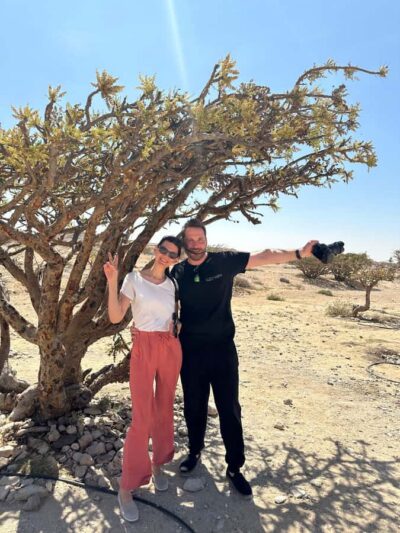
Sunset Desert Safari – Rub Al Khali – Empty Quarter
Read our review →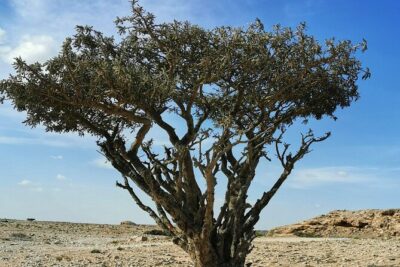
Desert Safari, Sunset & Sand Bashing (Rub Al Khali Desert)
Read our review →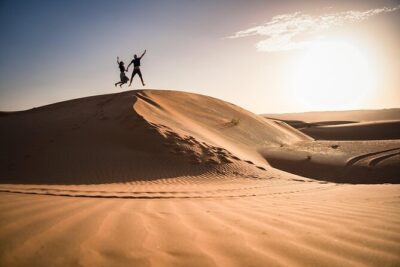
Magical Night Stay in Rub Al Khali Empty Quarter Desert Salalah
Read our review →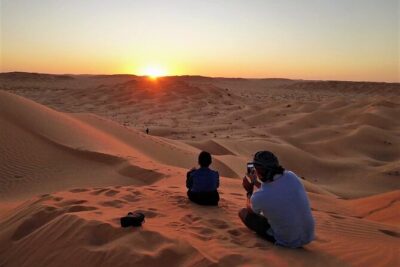
Desert Sunset Magic – Salalah Empty Quarter Experience
Read our review →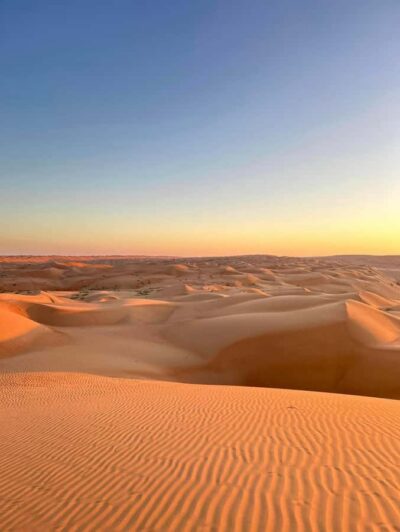
Magical Desert Safari By Land Cruise in Empty Quarter
Read our review →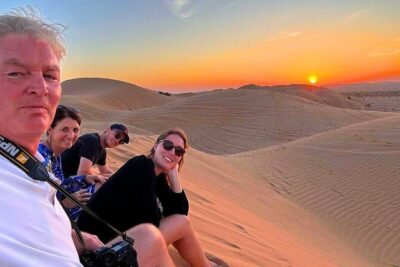
Private Sunset Experience in Empty Quarter Desert
Read our review →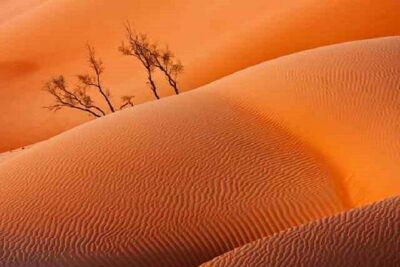
Browse the lists this tour appears in