
Reviewed · 5-DAY EXPERIENCES
5 Days 6 Nights Private Tour in Oman
Oman rewards curious detours. This six-day private tour brings together Muscat’s grand monuments, mountain villages, desert dunes, wadis, forts, and souqs without treating the country like a checklist. I like the chance to travel with a local guide who can adjust the pace, explain daily life, and point out details you could easily miss on your own. I also like the broad range of scenery, from turtle beaches to the cool heights of Jebel Akhdar. The main drawback is the pace: Wadi Shab requires a demanding walk and swim, while several long driving days pack many stops into one trip.
The tour costs $2,090.62 per person and is private, so the price makes more sense for couples, families, or a small group sharing the experience. Guides can work in English, Spanish, French, German, Italian, Russian, Portuguese, and Arabic. Past guests have especially praised Issam, Abdullah, and Ahmed for their language skills, warmth, careful driving, and ability to make the trip feel personal.
In This Review
- Six details that shape the Oman experience
- Muscat begins with mosques, opera, and old harbor streets
- Wadi Tiwi and Wadi Shab bring water into the desert
- Wadi Bani Khalid and Wahiba Sands offer Oman’s big outdoor contrast
- Birkat Al Mouz and Jebel Akhdar cool the fourth day
- Misfat, Al Hamra, and Bahla reveal older Oman
- Nizwa closes the trip with a fort, souq, and modern museum
- What the price includes, and what it leaves to you
- Who should choose this six-day route
- Should you book this Oman tour?
- FAQ
- How long is the tour?
- Is this a private tour?
- What languages can the guides speak?
- Is Wadi Shab suitable for everyone?
- Are meals included?
- Which major places are visited?
- Can I cancel for a full refund?
Six details that shape the Oman experience
- A true private itinerary: Only your group participates, giving you more say over timing and possible alternatives.
- Wadi Shab is the physical high point: Plan on about two hours of walking, plus swimming to reach the cave.
- Two desert and mountain nights: Wahiba Sands brings wide dunes and stars, while Jebel Akhdar offers cooler air and high views.
- Local culture is part of the route: Fish markets, a dhow workshop, old villages, irrigation channels, and food traditions receive real attention.
- The guides are a major strength: Issam is praised for speaking many languages, including Italian, French, Russian, and Catalan, while Abdullah and Ahmed also receive warm personal praise.
- Only three lunches are included: Water is provided, but brunch and other meals are not listed as included, so budget accordingly.
Muscat begins with mosques, opera, and old harbor streets
Your first day gives you a useful introduction to Muscat’s polished public face and older commercial quarter. At Sultan Qaboos Grand Mosque, you have about 50 minutes with a guide explaining the building’s design and story. It is a photo-friendly stop, but remember that mosque visits are shaped by opening hours and local dress expectations. The tour data does not specify visiting days or clothing rules, so confirm those details before arrival.
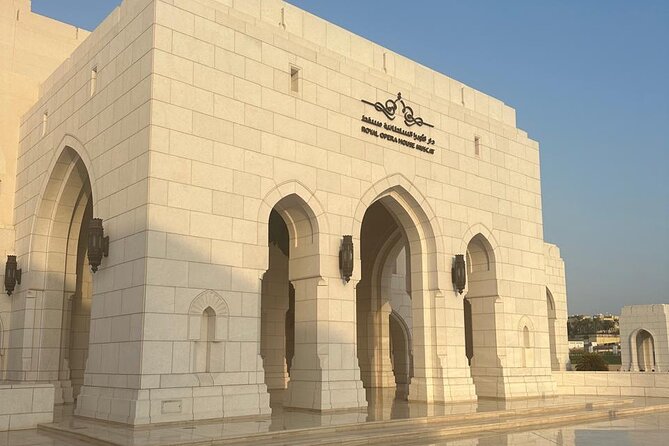
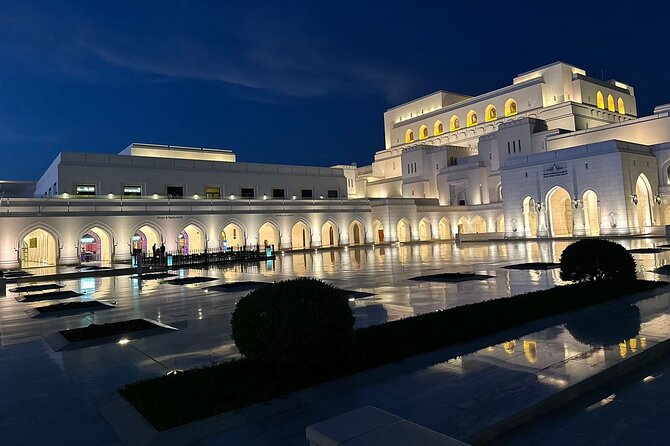
The Royal Opera House follows, with about 50 minutes inside. This is not just a quick exterior photograph. The building represents modern Omani interest in music and the arts, and admission is included. The stop adds a different note to the day after the mosque: one speaks to religious life and national identity, the other to contemporary culture.
At Bait Al Zubair, you get 30 minutes with traditional Omani objects and displays. I find museums like this useful early in a trip because they give context to the clothing, tools, architecture, and customs you will see later in villages and markets. The visit is short, so you should expect an introduction rather than a full museum afternoon.
Mutrah is the day’s most atmospheric walk. Allow an hour for the old market, where narrow lanes lead past traditional shops. You can browse at your own speed and ask your guide about the commercial role of the quarter. The nearby Mutrah Fish Market adds a more everyday scene, with about 20 minutes to watch local buying and selling. It is brief, but it helps balance the grand monuments with ordinary working life.
Al Alam Palace is a photo stop in old Muscat, located in the area associated with Portuguese colonization. The itinerary does not list an interior visit, so treat it as an exterior view and camera break rather than a palace tour.
A few more trips and experiences worth a look
- 5 Days – 4 Nights Private Roundtrip Tours – Fatimah Tours
★ 5.0 · 43 reviews - 5 Days 4 Nights Oman Package Tour Mohammed
★ 5.0 · 23 reviews - 5 Days Package TOUR DINA
★ 5.0 · 6 reviews
Wadi Tiwi and Wadi Shab bring water into the desert
Day two leaves Muscat for the coast and the water-cut valleys known as wadis. Wadi Tiwi offers a short walk and photographs where a village, palm trees, and flowing water meet. It is a gentle start, especially before the more strenuous Wadi Shab visit.
Wadi Shab is one of the tour’s biggest attractions, but it is also the clearest test of your fitness. The route involves about an hour walking to the wadi and another hour returning. Once there, you swim through the water to reach a cave. The outing lasts around three hours and admission is included.
You should take the physical warning seriously. The route includes walking in changing conditions and swimming, and the tour specifically recommends it only for people with moderate fitness who have no difficulty walking through varied circumstances. If it does not suit you, ask about an alternative before the day begins. This private format makes that conversation easier than it would be on a large scheduled group trip, but the alternative itself is not specified.
In Sur, a dhow factory provides a short look at Oman’s seafaring tradition. You have about 30 minutes to see the workshop and take pictures. The stop may feel modest after Wadi Shab, yet it connects the coast to a practical craft tradition rather than showing only scenery.
The evening visit to Ras Al Jinz Turtle Reserve is carefully timed after an early dinner. You take a short walk and watch for turtles nesting and laying eggs. The visit lasts about 90 minutes and admission is included. Wildlife sightings can never be guaranteed, so approach this as a protected-nature outing, not a staged show. Keep the evening schedule in mind too: the early dinner and night walk may make day two feel long.
Wadi Bani Khalid and Wahiba Sands offer Oman’s big outdoor contrast
Day three moves inland to Wadi Bani Khalid, where palm trees, mountain cliffs, and turquoise pools create one of the country’s most striking natural settings. You have about 90 minutes here. That is enough for a walk, photos, and time near the pools, though not enough for a slow, all-day stay.
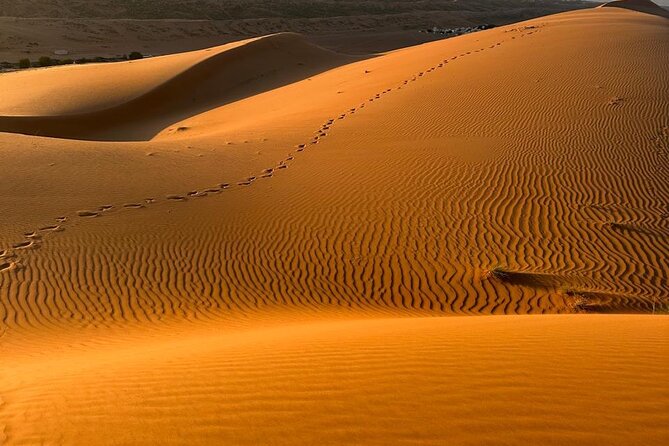
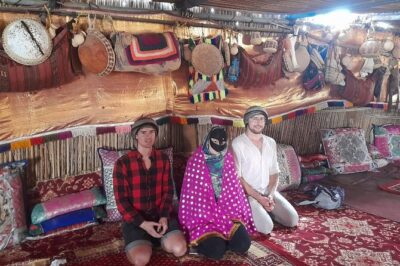
From the wadi, the route continues to Wahiba Sands. The desert stop lasts around three hours, followed by an overnight stay. The appeal is not simply the color and shape of the dunes. It is the change in rhythm. After roads, markets, and guided sightseeing, the open sand gives you a quieter evening and a chance to look at the sky without city noise.
The tour description presents the desert night as a major part of the trip, and I agree with that emphasis. A short drive across dunes can be memorable, but sleeping there gives the place more weight. At the same time, the information provided does not name the camp, list room types, or specify desert activities. If comfort level matters to you, ask exactly what the overnight arrangement includes before booking.
The long distances and heat also matter. You will be moving from a water-filled wadi to exposed desert in the same day. Carry the provided water, protect yourself from the sun, and keep your expectations practical: this is an outdoor section, not a resort break.
Birkat Al Mouz and Jebel Akhdar cool the fourth day
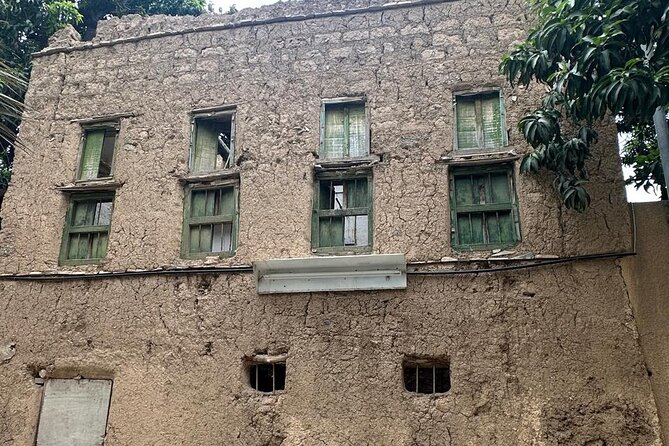
Day four trades sand for mountain air. Birkat Al Mouz is an old, partly abandoned village spread along the mountain area. You have about 25 minutes to see the ruins and consider how people once adapted to limited resources. The stop is short, but its rough walls and empty structures offer a strong contrast to Muscat’s restored public buildings.
Nearby Falaj Al Khatmain shows how water supported farms and homes. The falaj is an irrigation system and part of the UNESCO designation connected with Oman’s traditional water channels. The visit lasts only 10 minutes, so your guide’s explanation matters here. Without context, a channel may look simple. With context, it becomes a key to understanding how settlements survived in dry country.
Jebel Akhdar, or Green Mountain, brings a welcome change in temperature. The tour allows about three hours for a short mountain visit before the overnight stay. The route highlights terraced farms and wide mountain views, though the exact walks are not specified.
I would treat this as a recovery day after the desert and Wadi Shab, but not as a completely relaxed holiday day. The tour still covers ground, and the mountain stop is described as short. Ask your guide how much time you will have outside the vehicle if walking is important to you.
Something different, still within reach of Muscat:
- Muscat: Daymaniat Islands Snorkeling Trip with Brunch
★ 4.7 · 2,317 reviews - From Muscat: Wadi Shab & Bimmah Sinkhole Full-Day Tour
★ 4.8 · 1,862 reviews - Muscat: Wahiba Desert and Wadi Bani Khalid Guided Group Tour
★ 4.8 · 820 reviews - Muscat: Half-Day Sightseeing Essentials Tour and Audio Guide
★ 4.2 · 598 reviews
Misfat, Al Hamra, and Bahla reveal older Oman
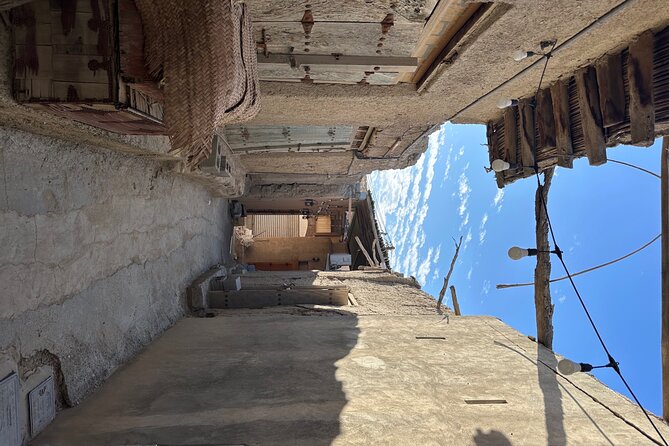
Day five is devoted to traditional settlements and fortified architecture. Misfat Al Abreyeen sits high on a mountain and is known for its compact construction. The houses seem to flow into one another, making it hard to tell where one building ends and the next begins. You have about 30 minutes to explore.
That visit is best for noticing how a village fits its slope. The stop is not presented as a long hike, so do not expect hours of wandering. Still, the unusual layout makes it one of the more memorable cultural pauses on the route.
Al Hamra offers another look at old Omani building methods. Its clay houses were built to withstand natural conditions, and the 20-minute stop lets you compare them with Misfat’s mountain setting. The two villages are close enough in theme to work well together, but the short visits mean you will need to listen closely to your guide and look carefully.
Bahla Fort appears as a photo stop rather than an interior tour. It is described as Oman’s oldest fort and part of a UNESCO site. Since you may not go inside, this is a place where a roadside view and explanation must do the work. If fort interiors are a top priority, note that Jabreen Castle and Nizwa Fort provide the more substantial visits.
Jabreen Castle receives an hour and an included admission. It combines defensive features with the feel of a residence, and the guide explains its past as you move through the building. This is one of the itinerary’s better-balanced stops because you get both architecture and time to understand how the castle functioned.
Nizwa closes the trip with a fort, souq, and modern museum
The final day begins at Nizwa Fort, one of Oman’s key historic monuments. The internal visit lasts about 50 minutes. The fort’s unusual form and past importance make it a useful final lesson in Oman’s political and military story, especially after seeing village houses and mountain settlements.
Nizwa Souq follows with an hour to browse. The market is presented as a place where commerce and Omani culture meet, with people arriving from different Arabic countries to trade. You can use this time to look rather than rush. The private format should help if you want to pause at a stall or ask about goods, though the tour does not specify shopping inclusions or purchases.
The last stop is the Oman Across Ages Museum, opened in 2023. With an hour inside, you get a modern presentation of the country’s different eras. It is an effective ending because the trip has already shown you mosques, forts, irrigation, markets, villages, and desert life. The museum gives those pieces a larger national frame.
Ending in Nizwa also makes practical sense as a finale. The final two days concentrate on forts, villages, museums, and markets rather than adding another demanding outdoor activity. You finish with culture and history still fresh in your mind.
What the price includes, and what it leaves to you
At $2,090.62 per person, this is not a budget sightseeing package. Its value depends on how many people share the private vehicle and how much you care about language support, flexible timing, and local interpretation. A private six-day route covering Muscat, the coast, desert, mountains, and Nizwa would otherwise require substantial planning and coordination.
The strongest value comes from the guide. Past praise focuses on friendly service, punctuality, careful driving, humor, and the ability to explain Oman in several languages. Issam is described as speaking twelve languages, including excellent Italian and strong French and Russian. Abdullah and Ahmed are also named positively. You should confirm which guide and language are assigned to your group, rather than assuming Issam will lead every departure.
Included items are professional local guiding, water, and three lunches. Brunch is not included, and the details do not say that dinners, breakfasts, accommodation, entrance fees at every stop, or desert and mountain lodging are covered. Some admissions are included, while other stops are free or photo stops. Ask for a full cost breakdown before paying, particularly if you want predictable meal and accommodation expenses.
The free-cancellation rule is generous if your plans change: cancellation at least 24 hours before the start time qualifies for a full refund. Changes or cancellations within 24 hours are not accepted or refunded, based on local time.
Who should choose this six-day route
I would recommend this tour to a couple, family, or small private group that wants Oman’s major contrasts in one organized trip. It suits people who value conversation with a guide more than a fixed group schedule, and it works especially well if you need support in a language other than English.
You should be comfortable with long days, outdoor heat, uneven walking, and a demanding Wadi Shab outing. Families should consider the swim and two-hour walking section carefully. Culture lovers will appreciate the museums, markets, forts, irrigation system, and old villages, while outdoor-minded visitors get wadis, dunes, mountain views, and turtles.
It is less suitable if you want slow mornings, luxury accommodation details, or long visits at each site. The route covers a great deal of Oman in six days, and some stops last only 10 to 30 minutes. The reward is variety; the cost is limited time in each place.
Should you book this Oman tour?
Book it if you want a private, guide-led introduction to Oman with a strong mix of nature and culture. The local approach, multilingual support, and willingness to shape the journey around your group are the best reasons to choose it.
Before booking, confirm the exact guide, accommodation, meals beyond the three included lunches, the plan for Wadi Shab if you cannot swim or walk for two hours, and the number of people sharing the price. If those details suit you, this is a well-rounded route with real variety, from Muscat’s grand buildings to a quiet desert night and Nizwa’s historic center.
FAQ
How long is the tour?
The tour lasts approximately six days and includes six itinerary days.
Is this a private tour?
Yes. Only your group participates in the activity.
What languages can the guides speak?
Professional local guides are available in English, Spanish, French, German, Italian, Russian, Portuguese, and Arabic.
Is Wadi Shab suitable for everyone?
No. The visit includes about one hour walking to the wadi, one hour walking back, and swimming to reach the cave. The tour recommends it for people with moderate physical fitness and no issues walking through varied conditions.
Are meals included?
Water and three lunches are included. Brunch is not included. The provided information does not list other meals as included.
Which major places are visited?
The route includes Muscat, Wadi Tiwi, Wadi Shab, Sur, Ras Al Jinz, Wadi Bani Khalid, Wahiba Sands, Birkat Al Mouz, Falaj Al Khatmain, Jebel Akhdar, Misfat Al Abreyeen, Al Hamra, Bahla, Jabreen Castle, Nizwa, and the Oman Across Ages Museum.
Can I cancel for a full refund?
Yes, if you cancel at least 24 hours before the experience start time. Cancellations made less than 24 hours in advance are not refunded.
Just added around Muscat
- WADI SHAB – Muscat, Oman★ 5.0 · 3 reviews
- Private Transfer from Muscat to Wahiba Sand Desert by 4WD Vehicle★ 5.0 · 3 reviews
- Dolphin Watching and Snorkeling Tour with Hotel Transfers★ 4.4 · 3 reviews
- Private Transfer from Muscat to Jebel Akhdar by 4WD Car★ 5.0 · 3 reviews
- Dimaniyat Islands Snorkeling Trip★ 5.0 · 3 reviews
- Tour Jawahir 2 Days-1 Night In Wahiba Sands, Oman Tours Package★ 5.0 · 3 reviews
- Muscat trasfer: airport trasfer to/from hotel in muscat★ 5.0 · 3 reviews
- Airport to Hotel Private Transfer in Muscat★ 5.0 · 3 reviews
5-Day Experiences, compared.
5 Days – 4 Nights Private Roundtrip Tours – Fatimah Tours
Read our review →


Oman Explorer: City, Wadis, and Desert 5-Day Adventure
Read our review →

Browse the lists this tour appears in