
Reviewed · OMANI CULTURE & CUISINE
Muscat: Omani Food Tour with Shuwa & Halwa
Five stops, one very full evening. This Muscat food tour makes Omani cuisine easier to understand by putting famous dishes such as underground-cooked shuwa beside everyday snacks, bread, tea, and grilled meat. I like the generous variety, and I like that the guides explain family traditions and food preparation rather than simply handing you a plate. The main consideration is simple: arrive hungry, and do not book this if you have food allergies.
I also like the small-group setup, capped at six people, and the included hotel pickup and drop-off. Guides including Hisham, Yousef, Yusuf, Hanieh, and Amin have been praised for their warmth, patience, and clear explanations. The 150-minute schedule can run longer if your group eats slowly and talks freely, so keep your evening flexible.
In This Review
- Key points at a glance
- Why this food tour is a smart first evening in Muscat
- Shuwa: the meal that takes patience
- Halwa and coffee: Oman’s sweet pause
- Zanzibar snacks and Oman’s East African connections
- Omani bread with sweet and savory toppings
- Spiced tea, rose-water coffee, and the karak habit
- Mishkak closes the evening with smoke and spice
- What the $77 price really buys you
- Pickup, group size, and practical comfort
- Who should book this Muscat food tour?
- Should you book it?
- FAQ
- How long does the Omani food tour last?
- What food is included?
- Is hotel pickup included?
- What if my hotel is outside the pickup area?
- Can vegetarians join the tour?
- Is the tour suitable for people with food allergies?
Key points at a glance
- Shuwa is the star dish: Taste meat or chicken cooked underground for eight to 24 hours after being wrapped in banana leaves and spices.
- Five food stops create real variety: The route moves from a major Omani meal to sweets, Zanzibar-influenced snacks, bread, tea, and mishkak.
- Expect more than a meal: Guides explain how dishes are prepared, where they came from, and what they mean in Omani family life.
- Come with a serious appetite: Portions are generous, and the full sequence can leave you very well fed.
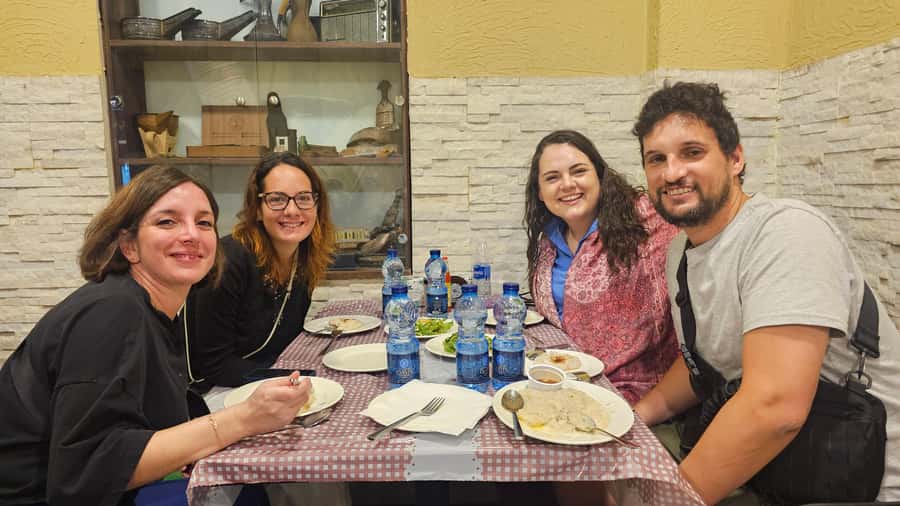
- Small groups make conversation easy: With no more than six people, it is practical to ask questions or request help with unfamiliar foods.
- Vegetarian substitutions are possible: Meat or chicken can be replaced with fish or salad, but people with food allergies should not book.
Why this food tour is a smart first evening in Muscat
Food is one of the quickest ways to get your bearings in a new country. This tour works especially well at the start of an Oman trip because it gives you a working vocabulary for local menus. After one evening, you will know the difference between shuwa, mishkak, halwa, Omani bread, and the East African snacks sold in many parts of Muscat.
The tour lasts 150 minutes and includes transportation from your hotel. That matters in Muscat, where sights and restaurants are spread across a long coastal city rather than packed into one walkable center. You are not left trying to find five unfamiliar food spots on your own, and you get time in the car to ask about Oman more generally.
Several guides have also added cultural context during the drive. Yousef has shown short videos of food being made for his family celebrations, while Hisham has been praised for explaining the background of each dish in an easy, personal way. One evening included a brief detour to see a mosque, and another private tour included a short visit to the Grand Mosque. These additions are not guaranteed, but they show how the guides may shape the outing around the group.
The tour is conducted in English. With a maximum of six people, it feels closer to an informal food outing than a large coach excursion. Solo visitors can meet other people without being swallowed by a crowd, while couples and families have enough space to ask questions.
More Omani culture and food experiences in Muscat:
- Muscat: Omani Dhow Coastal and Sunset Cruise
★ 4.6 · 198 reviews - Muscat: Omani Traditional Dhow Sunset Cruise
★ 4.4 · 53 reviews - Muscat : Private morning tour with an Omani guide
★ 4.5 · 39 reviews
Shuwa: the meal that takes patience
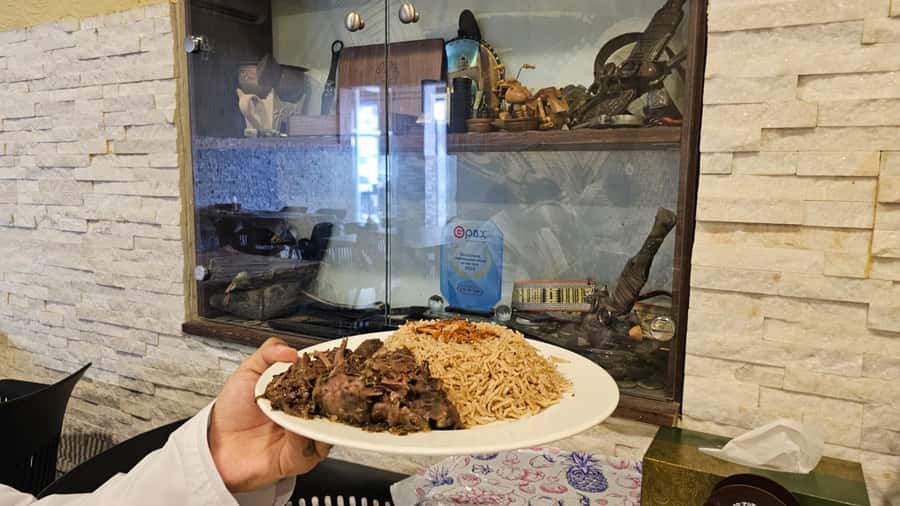
The first major taste is Omani shuwa, usually made with meat or chicken. The preparation is a slow, communal process: the meat is wrapped in banana leaves and spices, then placed underground to cook for eight to 24 hours. The recipe description also refers to fermentation for more than 40 days, a detail that helps explain why this is a special-occasion food rather than a quick weekday supper.
Shuwa is served with Qabuli rice, cooked with meat spices. The combination is filling and aromatic, with the rice giving the meal a softer, lighter partner to the main meat. This is the point where you begin to see why Omani food cannot be reduced to one flavor or one outside influence. Slow cooking, spice blends, rice, and communal eating all meet in one plate.
I appreciate that the guides use this dish to explain how food is made, not only how it tastes. Yousef and Hisham have used short videos and family stories to show the work behind celebratory meals. That turns shuwa from an exotic-sounding menu item into something connected to home life and family gatherings.
The practical warning is portion size. Shuwa arrives early in the sequence, but you still have several stops ahead. Take a proper taste, enjoy the rice, and resist the urge to treat the first course like a final dinner. This is not the night for a small snack beforehand.
Halwa and coffee: Oman’s sweet pause
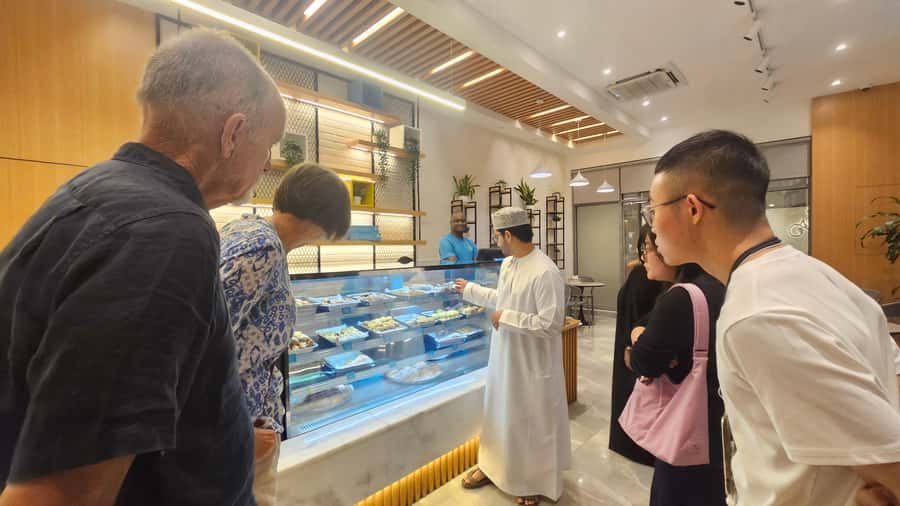
After the savory main course comes Omani halwa, served with coffee. This is a dense, sweet confection made with ingredients including nuts, honey, saffron, ghee, and cardamom, along with a few ingredients kept secret by the maker.
Halwa is not merely a dessert added at the end of a restaurant meal. It is part of Omani hospitality, and the pairing with coffee gives the stop a social feel. The coffee helps balance the sweetness, while saffron and cardamom give the halwa a fragrant, spiced character.
If you usually prefer savory food, this may be the course that needs the most adjustment. Halwa is rich and sweet, and you are likely to taste it soon after a generous serving of shuwa. Still, it is worth trying in a small portion because the point is to understand how Oman welcomes people, not simply to identify your favorite dish.
The guides also serve coffee with rose water elsewhere in the experience. That floral note may surprise you if you expect plain black coffee, but it fits the broader pattern of Omani drinks: familiar ingredients with a distinctly local accent.
Zanzibar snacks and Oman’s East African connections
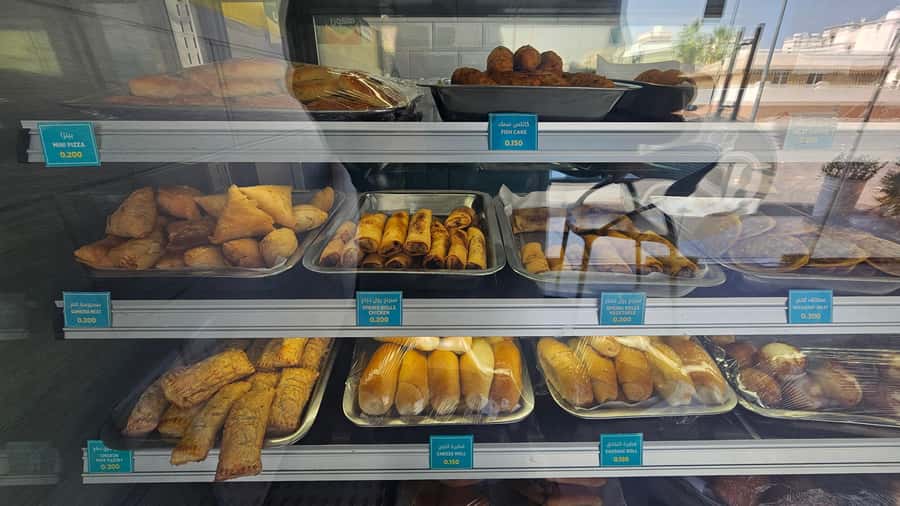
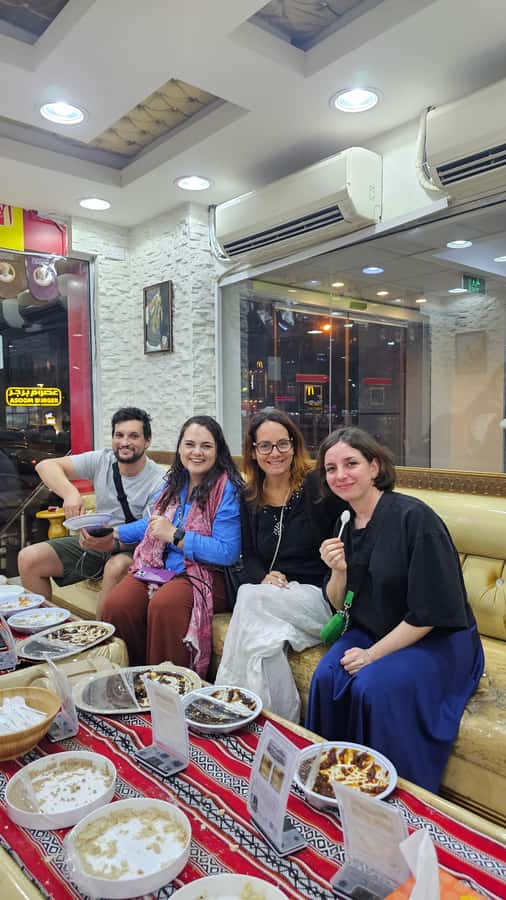
The next stop shifts the mood with light foods linked to East Africa, especially Zanzibar. You may try samosas, mandazi, kachori, and katlisi. These are smaller bites than the shuwa meal, but they bring a useful reminder that Omani cuisine has been shaped by movement across the Indian Ocean.
Mandazi is a lightly sweet fried bread, while samosas and kachori offer crisp, savory contrasts. Katlisi adds another option to the plate. You do not need to know the exact recipe of every snack to appreciate what this course shows: Muscat’s food culture includes connections to Zanzibar and East Africa alongside its Arabian traditions.
This was one of the most warmly praised parts of the experience. The Zanzibar snacks are repeatedly singled out as favorites, especially when paired with the explanations about their origins. I would pay attention here, because it is easy to assume that Omani food is only about rice, meat, and dates. This stop corrects that narrow view.
The word light should be taken in relative terms. These are snacks, but they arrive after shuwa and halwa, with bread and grilled food still ahead. Share freely and save room.
More food experiences:
- Jabal Shams Food Tour
★ 5.0 · 5 reviews - Historical Salalah City Tour with Culture, Food & Shopping
★ 4.6 · 20 reviews
Omani bread with sweet and savory toppings
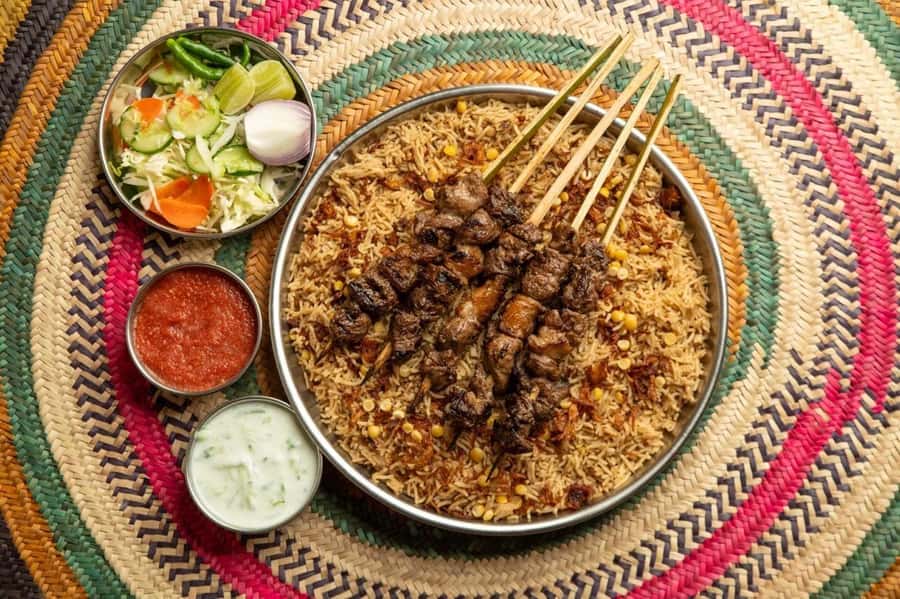
Omani bread provides the most flexible part of the meal. You may taste slices with cheese, honey, date juice, eggs, potatoes, or thyme. That range lets you compare the same basic bread with very different flavors.
The savory versions, especially egg, potato, cheese, and thyme, make the bread feel like practical everyday food. Honey and date juice move it toward dessert. This is a good stop for anyone who wants to understand how simple staples can appear across different parts of a meal.
I like this course because it gives you choices. If the heavier meat dishes are not your favorite, the bread can keep the meal balanced. It also helps people who are cautious with unfamiliar food, since cheese, eggs, potatoes, and honey are easy points of entry.
Still, this is not a cooking class, and you may not get a detailed demonstration of every topping. The value lies in tasting the combinations and hearing how Omani bread fits into daily eating. Ask the guide which version is most traditional or most common in family meals.
Spiced tea, rose-water coffee, and the karak habit
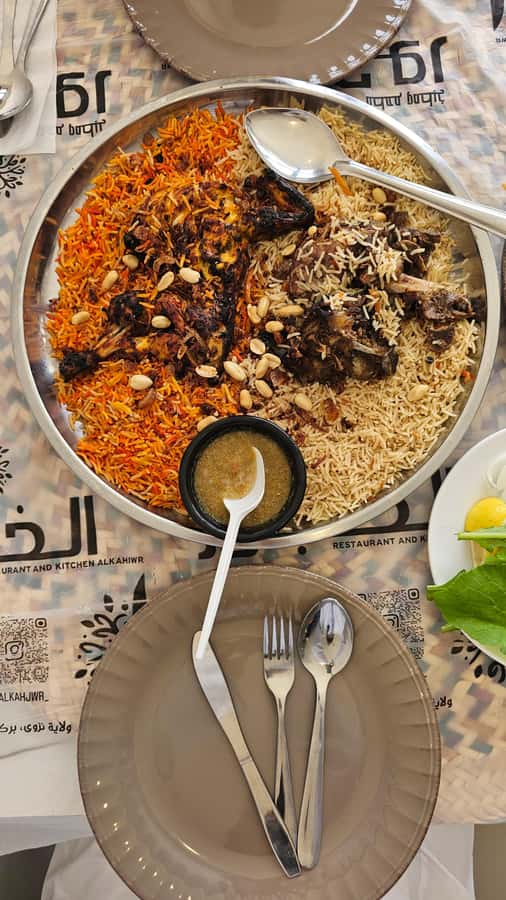
Tea arrives with spices such as ginger, saffron, cardamom, cinnamon, and milk. The result is warm, sweet, and fragrant, with ginger and cardamom giving the drink a lively edge. Some accounts of the tour also refer to karak tea, a popular style that fits naturally into the evening’s sequence.
One charming detail is the Omani habit of ordering and drinking karak tea in the car. It is a small moment, but it gives the tour a sense of ordinary city life rather than making every stop feel staged. You get to taste the drink while moving between places, just as you might during a casual evening out with a local friend.
The tea also acts as a reset between heavier foods. It is not a substitute for water, and fresh juices are not included, so you should plan to pay separately for any juice you want. Coffee with rose water provides a second local drink to compare with the spiced tea.
Guides are happy to answer questions during these pauses. Several have also offered suggestions for the rest of an Oman trip, which is useful if you book this early and want practical food or sightseeing advice.
Mishkak closes the evening with smoke and spice
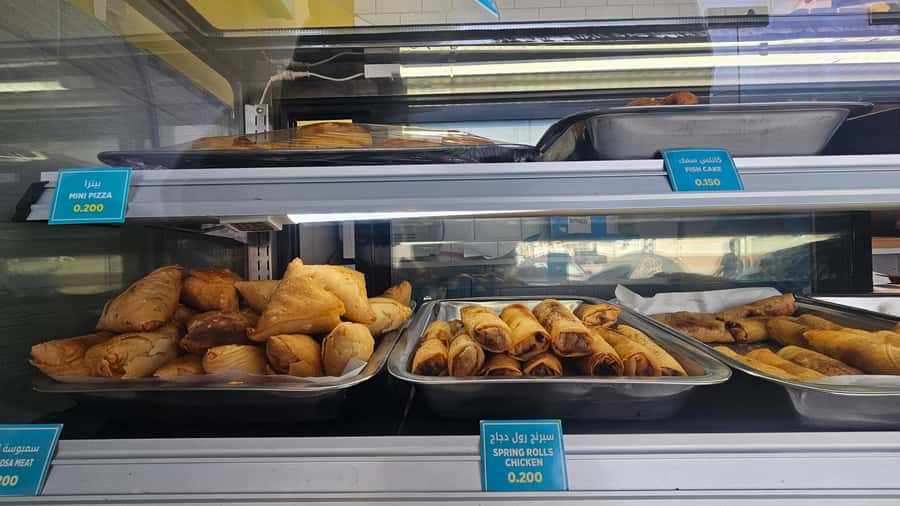
The final savory stop is mishkak, grilled pieces of meat, chicken, or squid served with a tamarind-like sauce and traditional Omani spices. After the slow, soft texture of shuwa, mishkak brings a firmer bite and a more direct grilled flavor.
You can choose from different proteins when available, and the listed vegetarian option allows fish or salad in place of meat or chicken. If you eat seafood, squid gives you a different way to finish the meal. If you prefer familiar flavors, grilled chicken may be the easiest choice.
Mishkak is a fitting end because it feels casual and social. Skewered food is easy to share, and the sauce gives the final course a sweet-sour contrast to the earlier rice, bread, and sweets. By this point, you will probably be judging food by appetite as much as curiosity.
The one limitation is that exact dishes can vary with availability and dietary needs. The advertised selection includes meat, chicken, or squid, while substitutions are possible for vegetarians. Tell the operator your needs before the tour rather than waiting until the last stop.
What the $77 price really buys you
At $77 per person, this is not the cheapest way to eat in Muscat. You are paying more than the cost of ordering one meal at a local restaurant, but the comparison is not quite fair. The price includes hotel pickup and drop-off, a small group, five types of food experiences, drinks, and a guide who explains the cultural setting.
The food itself is generous. You are not paying for a single tasting plate with token bites. The sequence includes shuwa with Qabuli rice, halwa and coffee, East African snacks, Omani bread, spiced tea, and mishkak. Several people have found the portions large enough to leave them completely full.
The strongest value comes from access and context. You could order shuwa or mishkak independently, but you might not know which dishes to choose, where to look, or how they fit into Omani life. The guide also saves you the time of arranging transport between several places.
I would consider the price fair if you want an introduction rather than a cheap dinner. It is especially good value on your first night, when a single booking can introduce you to the food you will see during the rest of your trip. If you are already an expert on Omani cuisine and only want one specific dish, a normal restaurant meal may suit you better.
Pickup, group size, and practical comfort
Pickup is included from the hotel, and you should wait in the lobby. If your accommodation is outside the pickup area or is not listed, choose the Royal Opera House as the meeting point and make your own way there.
The small vehicle and limited group size have received strong praise. A clean, comfortable car makes a difference when you are moving around Muscat for an evening, and it gives you a relaxed place to talk between stops. Group numbers are limited to six, though the actual group may be smaller.
The scheduled 150 minutes is a useful guide, not a hard stop. If people eat slowly, ask many questions, or linger over conversation, the outing may run over. I would avoid booking a tightly timed evening performance immediately afterward.
The tour is wheelchair accessible, but the information provided does not explain the details of every food stop. If you use a wheelchair, confirm the specific access arrangements before booking.
Alcohol is not allowed in the vehicle, and smoking and pets are not allowed. Personal expenses and fresh juices are extra. Cancellation is free up to 24 hours before the start time, and the reserve-now, pay-later option can help if your Muscat plans are still changing.
Who should book this Muscat food tour?
I would recommend it to first-time visitors who want a friendly introduction to Oman without spending an evening guessing at menus. It also suits solo visitors, couples, and small families who enjoy conversation and do not mind sharing food with a few other people.
It is a good fit for curious eaters who want both famous dishes and less obvious connections, especially the Zanzibar snacks and the everyday bread combinations. The cultural explanations are a major part of the value, so you should enjoy asking questions about family customs, food preparation, and daily life.
Vegetarians can request fish or salad instead of meat or chicken. That makes the tour more workable, though the menu is strongly centered on meat, so you should contact the operator ahead of time to discuss your needs.
I would not book this if you have food allergies. The tour is not considered suitable for people with food allergies, and the number of dishes and ingredients makes this an important safety concern. It is also a poor match if you want a short, minimalist tasting or if you dislike rich, filling meals.
Should you book it?
Book this tour if you want to understand Muscat through its food, not simply eat one famous dish. The combination of shuwa, halwa, Zanzibar snacks, Omani bread, spiced tea, and mishkak gives you a broad first look at the country’s table.
The guides are the real advantage. Hisham, Yousef, Yusuf, Hanieh, and Amin have made the evening personal with patient explanations, family stories, practical advice, and genuine warmth. Come hungry, keep your schedule open, and treat the $77 as the cost of a guided introduction to Omani food culture, transportation included.
FAQ
How long does the Omani food tour last?
The scheduled duration is 150 minutes. It may run longer if the group eats slowly or spends extra time talking.
What food is included?
The experience includes shuwa, Omani halwa with coffee, East African snacks, Omani bread with different flavors, spiced tea, and mishkak.
Is hotel pickup included?
Yes. Hotel pickup and drop-off are included. You should wait in the hotel lobby at the agreed time.
What if my hotel is outside the pickup area?
Choose the Royal Opera House as the meeting point and arrive there independently if your hotel is outside the pickup area or is not listed.
Can vegetarians join the tour?
Yes. Meat or chicken can be replaced with fish or salad. You should communicate your dietary needs before the tour.
Is the tour suitable for people with food allergies?
No. The experience is not considered suitable for people with food allergies.
Just added around Muscat
- WADI SHAB – Muscat, Oman★ 5.0 · 3 reviews
- Private Transfer from Muscat to Wahiba Sand Desert by 4WD Vehicle★ 5.0 · 3 reviews
- Private Transfer from Muscat to Jebel Akhdar by 4WD Car★ 5.0 · 3 reviews
- Dimaniyat Islands Snorkeling Trip★ 5.0 · 3 reviews
- Dolphin Watching and Snorkeling Tour with Hotel Transfers★ 4.4 · 3 reviews
- Muscat trasfer: airport trasfer to/from hotel in muscat★ 5.0 · 3 reviews
- Tour Jawahir 2 Days-1 Night In Wahiba Sands, Oman Tours Package★ 5.0 · 3 reviews
- Airport to Hotel Private Transfer in Muscat★ 5.0 · 3 reviews
Omani Culture & Cuisine, compared.




Omani Traditional Dhow Cruise: Sunset and Muscat Coastal View
Read our review →
Enjoy a traditional Omani local style tour around Muscat
Read our review →


Browse the lists this tour appears in