
Reviewed · JEBEL SHAMS & THE GRAND CANYON
2-Days 1 Night Private Jebel Shams Tour
Oman’s mountain country rewards a slower pace. This two-day private trip from Muscat strings together old forts, village ruins, Nizwa’s market, and the great canyon of Jebel Shams without making you handle the driving or entrance fees. I especially like the private 4WD transport, which lets your group set the rhythm, and the way the tour combines major sights with smaller stops such as Fanja and Birkat Al Mouz.
The included dinner, breakfast, accommodation, water, and admission tickets also make the $494 per-person price easier to judge. You have fewer surprise costs along the way. The main drawback is the packed route: with many stops over two days, some visits may feel brief, and lunch is not included.
In This Review
- What makes this mountain trip worth considering
- From Muscat to Fanja, the first taste of Al Dakhiliyah
- Birkat Al Mouz and the irrigation systems that keep villages alive
- Nizwa Souq and Nizwa Fort, two sides of Oman’s old capital
- Al Hamra and the old houses of Oman’s interior
- Sleeping at Jebel Shams, the Grand Canyon of Oman
- The Jebel Shams canyon walk on the second morning
- Bahla Fort, a UNESCO-listed stop on the way down
- Jabrin Fort and the long road back to Muscat
- What the $494 price includes, and what it does not
- Who will enjoy this tour most
- Practical details before you book
- Should you book the Jebel Shams private tour?
- FAQ
- Where does the tour start?
- What time does the tour begin?
- Where does the tour end?
- Is this a private tour?
- What type of vehicle is used?
- Is an English-speaking guide included?
- Are entrance fees included?
- Are meals included?
- Is accommodation included?
- Can I cancel for a full refund?
What makes this mountain trip worth considering
- Fanja opens the journey with a quick mountain-country photo stop, just beyond Muscat and near the entrance to Al Dakhiliyah.
- Birkat Al Mouz shows Oman’s traditional irrigation systems, including the Aini, Dawoodi, and Ghaily methods.
- Nizwa combines a working souk with one of Oman’s largest forts, giving you culture and architecture in the same stop.
- Jebel Shams is the overnight centerpiece, with time to see Oman’s most famous canyon in the morning.
- Bahla and Jabrin forts fill out the second day, adding two very different heritage sites before the return to Muscat.
- The private format suits families and small groups, especially if you value flexibility over a fixed coach schedule.
From Muscat to Fanja, the first taste of Al Dakhiliyah
The tour begins at 8:30 am, with pickup available anywhere in the Muscat area. The listed meeting point is Star Tours Oman on 18th November Street, and the return is to the meeting point. If you are arranging a hotel pickup, confirm the exact time and location before setting off.
The first stop is Fanja, a town described as the gateway to the Al Dakhiliyah region. You get about 30 minutes here, mainly for photographs and a first look at the change from Muscat’s urban setting to Oman’s interior country.
I like this as an opening stop because it does not try to be more than it is. You are not spending half the morning at a minor attraction. Instead, you get a short pause, a chance to stretch your legs, and some early photographs before the more substantial visits begin. If you want a long walk or an in-depth town visit, Fanja will feel limited.
More Jebel Shams and canyon trips:
- Nizwa Fort-Nizwa Souq-Misfah Al Arbyeen-Jebel Shams – Private Full Day Tour
★ 5.0 · 220 reviews - From Muscat: Nizwa and Jebel Shams Day Trip
★ 4.8 · 153 reviews - Private Day Trip to Nizwa & Jabal Shams (The Grand Canyon of Oman)
★ 5.0 · 57 reviews
Birkat Al Mouz and the irrigation systems that keep villages alive
Birkat Al Mouz receives about two hours, making it one of the more valuable stops on the first day. The village climbs along a small mountain beside an oasis filled with banana trees and date palms. That contrast, dry mountain slopes beside cultivated green areas, helps explain how Omani settlements have survived in demanding conditions.
The focus here is the Al Kattmyn irrigation system. You can learn about three traditional methods: Aini, Dawoodi, and Ghaily. These systems are not simply decorative remnants. They show how water has been directed and shared through villages and plantations.
This is the kind of stop I appreciate on an Oman trip because it gives context to everything you see later. Forts and souks are easy to photograph, but an irrigation system explains how communities functioned. Allow yourself time to look closely rather than treating the village as a quick route to Nizwa.
The two-hour allocation is generous compared with Fanja, but the precise walking conditions are not specified. Comfortable shoes and protection from the sun are sensible choices. Bring water even though water is included, especially if you prefer to carry your own bottle during the day.
Nizwa Souq and Nizwa Fort, two sides of Oman’s old capital
Nizwa was Oman’s old capital and remains one of the country’s best-known cultural stops. The souq visit lasts about an hour, giving you time to browse Omani silver crafts, handmade goods, and souvenirs.
I would keep your shopping expectations practical. One hour passes quickly, especially if you want to compare items or ask about crafts. You may find the souq more enjoyable if you decide in advance whether you are mainly browsing, buying a small souvenir, or looking for a particular silver item. The private tour means you can ask your guide for help with timing, but the overall day still has several stops ahead.
Nizwa Fort follows, with another hour inside the landmark. It was built by Sultan Bin Saif Al Yarubi and is described as the largest fort in Oman. The pairing works well: the souq shows the continuing commercial side of Nizwa, while the fort gives you a look at the city’s defensive and political importance.
An hour is enough for a focused visit, though it may not satisfy you if you want to inspect every room at length. The advantage is that you see the fort without giving up the other major stops on the route. Admission is included, so you do not need to budget for a ticket at the entrance.
Al Hamra and the old houses of Oman’s interior
Al Hamra receives roughly two hours and offers a different mood from Nizwa. This is a 400-year-old town associated with the Al Abri tribe and known for some of Oman’s oldest preserved houses. It is also connected with the mountain village of Misfat Al Abryeen.
The supplied schedule groups Al Hamra and Misfat Al Abryeen together in its description, but it does not promise a separate stop or a specific visit inside Misfat. I would clarify with the guide exactly what you will see here if Misfat is a priority for you.
What makes Al Hamra useful is its sense of age and continuity. Nizwa gives you grand public buildings and market activity. Al Hamra gives you older residential architecture and a closer look at village life. You can use this stop to slow down, take photographs, and notice how different the settlement feels from the fort towns.
Since the route is long, do not expect every stop to offer the same level of guided detail. The English-speaking Omani guide arranges the logistics and can provide local explanation, but the exact depth of commentary may depend on the questions you ask. I would speak up if you want more cultural background.
A few more trips and experiences worth a look
- Muscat: Omani Dhow Coastal and Sunset Cruise
★ 4.6 · 198 reviews - Muscat: Evening Guided City Highlights Tour by Van
★ 4.8 · 175 reviews - Private Watching Sunset Desert Safari Tour
★ 5.0 · 71 reviews - Historical Muscat Sunset Tour
★ 4.5 · 60 reviews
Sleeping at Jebel Shams, the Grand Canyon of Oman
The first day ends with an overnight stay at Jebel Shams, known as the Grand Canyon of Oman. The schedule gives this portion about 12 hours, which includes the overnight period rather than 12 hours of sightseeing.
Accommodation is included, along with dinner and breakfast. That matters here because Jebel Shams is the point where the tour moves away from city services and into the mountains. You do not have to arrange a separate hotel or search for dinner after a long day on the road.
The accommodation standard is not specified, so I would ask what property is being used before booking if room type or hotel quality matters to you. The same applies to bedding arrangements for a private group. The tour does clearly include accommodation, but it does not describe the room, facilities, or exact location.
Dinner is a welcome inclusion, but lunch is not covered on either day. Plan for that cost and ask the guide when and where lunch can be arranged. Since the route includes several long driving sections, it is worth keeping a few personal snacks with you.
The Jebel Shams canyon walk on the second morning
After breakfast, you depart for the canyon area. The schedule allows about three hours at Jebel Shams, giving you more than a quick roadside photograph.
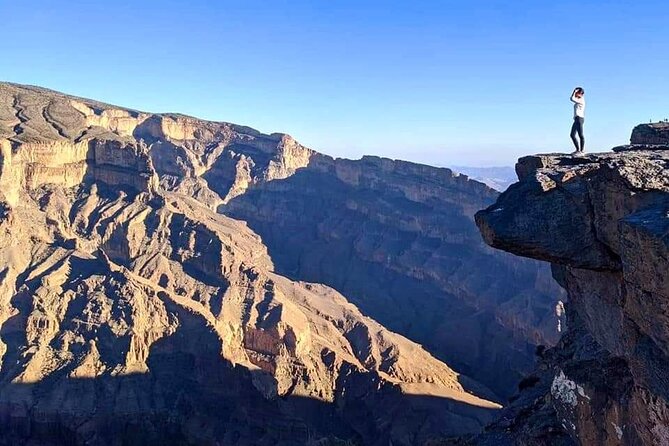
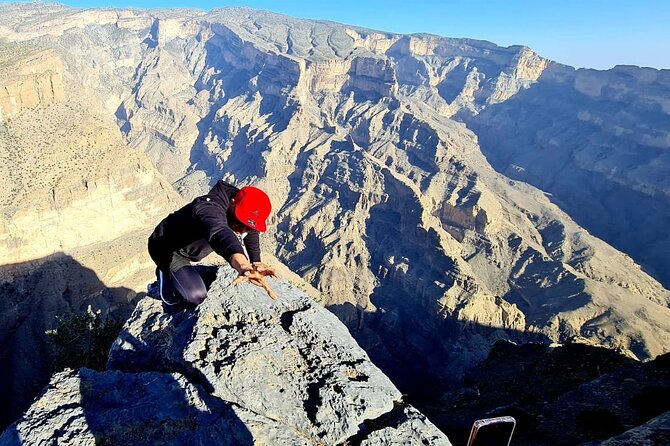
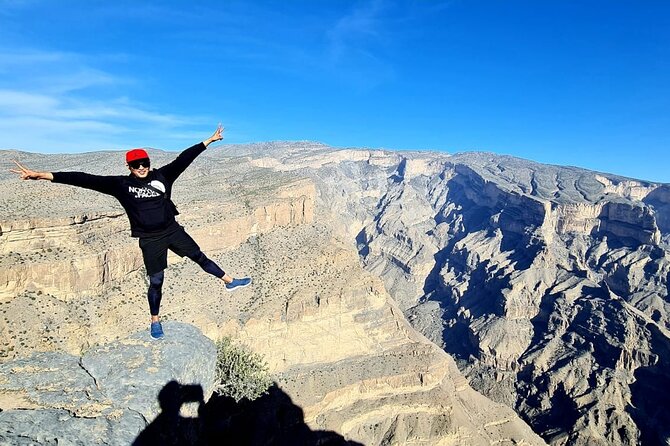
The canyon is the emotional high point of the trip. The scale is the reason to come: enormous rock walls, open mountain views, and a setting that feels entirely different from Muscat. The description says you can walk through the area, but it does not identify a named trail, trail length, or technical difficulty.
That lack of detail matters. If you want a specific hike, such as a long ridge walk or a demanding route, ask the operator what is planned. If you simply want time around the canyon, photographs, and a manageable walk, the three-hour visit should be more useful.
Morning is a good time for this stop because you have breakfast before leaving and can see the canyon before the return drive begins. Wear shoes suitable for uneven ground. You should also be comfortable with mountain roads and open heights, even though the tour is not described as a technical hiking excursion.
Bahla Fort, a UNESCO-listed stop on the way down
After Jebel Shams, the 4WD vehicle drives down the mountains for about 25 kilometers to Bahla Fort. The visit lasts approximately two hours.
Bahla Fort is listed by UNESCO as one of the oldest heritage sites in the world. That gives the stop real weight, but the appeal is not just its age. The fort forms part of the wider story of Oman’s inland settlements, where defensive buildings, agricultural villages, and trade routes were closely linked.
Two hours gives you time to explore without rushing. After the canyon, Bahla also changes the pace of the day. Jebel Shams is about natural scale. Bahla brings you back to built heritage and the work of past communities.
The route description contains a small wording error about the drive, but the intended sequence is clear: descend from Jebel Shams and visit Bahla before Jabrin. If road conditions or timing change, your guide handles the order. Entrance fees are included.
Jabrin Fort and the long road back to Muscat
The final major visit is Jabrin Fort, also called Jabrin or Jabrin Fort in the schedule. You have about two hours here.
Jabrin was designed as a residence in 1670 under Sultan Bin Saif Al Yarubi, with Imam Bilarab Bin Sultan supervising its construction. That residential purpose helps distinguish it from a purely defensive fortress. The visit lets you consider how Omani rulers lived and governed, not only how they protected their territory.
The final return to Muscat takes place late in the afternoon. The tour does not provide an exact arrival time, so keep your evening plans flexible. I would avoid booking a tight dinner reservation, airport transfer, or other fixed activity immediately after the expected return.
This second day is full but well balanced in subject matter. You have the canyon in the morning, then two forts. The tradeoff is that the drive back can make the day feel tiring, particularly if you prefer a slower schedule.
What the $494 price includes, and what it does not
At $494 per person, this is not a budget day trip. It is a two-day private excursion with transport, a guide, lodging, two meals, water, and entrance fees. The value improves when you are traveling with others who would otherwise need to arrange separate transport, rooms, tickets, and a guide.
The private format is the biggest value point. Only your group participates, so you are not tied to the needs of a large coach party. You can ask for more time at a fort, move through the souq at your own speed, or spend less time at a stop that does not interest you. The guide still has to manage a demanding schedule, but the experience should feel more personal than a standard group tour.
The included tickets remove small payment decisions during the day. Dinner and breakfast also simplify the overnight stay. Water is provided, and the comfortable 4WD vehicle is suited to a mountain route.
Lunch is the clear extra expense. The tour also does not specify the accommodation category, room arrangement, exact hiking route, or final return time. Those details do not make the trip poor value, but they are the points I would confirm before paying.
Who will enjoy this tour most
I would choose this trip if you have limited time in Oman and want the interior’s major highlights in one organized outing. It suits couples, families, and small private groups who prefer an English-speaking guide and do not want to drive the mountain roads themselves.
It is also a good fit if you want variety. In two days, you see an oasis and irrigation system, a souq, major forts, old village architecture, and a canyon. Few stops feel identical.
I would think twice if your priority is a long Jebel Shams hike. The schedule gives you three hours at the canyon, but no named trail or hiking distance is provided. I would also reconsider if you dislike early starts, long drives, or a full sightseeing schedule.
A published customer score of 5 out of 5 from 23 ratings, with 100 percent recommending the experience, supports the strongest parts of the trip: welcoming guiding, impressive places, and good overall organization. No guide name is provided, so you cannot request a particular guide in advance based on the available details.
Practical details before you book
Confirmation is provided when you book. Pickup is offered anywhere in the Muscat area, while the listed starting point is Star Tours Oman on 18th November Street. The tour starts at 8:30 am and ends back at the meeting point.
Most people can participate, and the activity is private. The tour requires good weather. If poor weather causes cancellation, you receive the choice of another date or a full refund.
For a normal cancellation, you must cancel at least three full days before the local start time to receive a full refund. Cancellations or changes within three days are not refunded or accepted. Keep that rule in mind before committing to a tight Oman itinerary.
Should you book the Jebel Shams private tour?
Book it if you want a well-organized two-day route through Oman’s interior and value a private vehicle, local guide, included tickets, and an overnight mountain stay. The mix of Nizwa, Al Hamra, Jebel Shams, Bahla, and Jabrin gives you a strong introduction to the region.
Ask a few questions first: What accommodation is included? Where is lunch arranged? What exact canyon walk is planned? What time should you expect to reach Muscat? If the answers suit you, the price is reasonable for a private, all-in-one experience with very little planning left for you.
Skip it if you want a relaxed single-focus hiking trip or a highly polished hotel experience that has been specified in detail. For most first-time visitors with only a short window outside Muscat, though, this tour offers a practical route and plenty of memorable stops.
FAQ
Where does the tour start?
The listed starting point is Star Tours Oman on 18th November Street in Muscat. Pickup is also offered anywhere in the Muscat area.
What time does the tour begin?
The tour starts at 8:30 am.
Where does the tour end?
The activity ends back at the meeting point.
Is this a private tour?
Yes. Only your group participates.
What type of vehicle is used?
Transportation is provided in a comfortable 4WD vehicle.
Is an English-speaking guide included?
Yes. An Omani tour guide who speaks English is included.
Are entrance fees included?
Yes. Admission fees for the included attractions are covered.
Are meals included?
Breakfast and dinner are included. Lunch is not included.
Is accommodation included?
Yes. One night of accommodation at Jebel Shams is included.
Can I cancel for a full refund?
Yes, if you cancel at least three full days before the experience start time. Cancellations within three days are not refunded, and changes during that period are not accepted.
More 2-Day Experiences
- 2 Days and 1 Night Private Wahiba Sands Desert Tour
★ 5.0 · 56 reviews - Private Overnight at Jebel Shams – 2 Days and 1 Night Tours
★ 5.0 · 37 reviews - 2 days and 1 night Private Tour in Wadi Shab to Wahiba Sands Desert
★ 5.0 · 29 reviews - Private 2 Days 1 Night Wahiba Sands Desert and Wadi Bani Khalid Tour
★ 5.0 · 22 reviews
Just added around Muscat
- WADI SHAB – Muscat, Oman★ 5.0 · 3 reviews
- Private Transfer from Muscat to Wahiba Sand Desert by 4WD Vehicle★ 5.0 · 3 reviews
- Private Transfer from Muscat to Jebel Akhdar by 4WD Car★ 5.0 · 3 reviews
- Dimaniyat Islands Snorkeling Trip★ 5.0 · 3 reviews
- Dolphin Watching and Snorkeling Tour with Hotel Transfers★ 4.4 · 3 reviews
- Muscat trasfer: airport trasfer to/from hotel in muscat★ 5.0 · 3 reviews
- Tour Jawahir 2 Days-1 Night In Wahiba Sands, Oman Tours Package★ 5.0 · 3 reviews
- Airport to Hotel Private Transfer in Muscat★ 5.0 · 3 reviews
Jebel Shams & the Grand Canyon, compared.
Nizwa Fort-Nizwa Souq-Misfah Al Arbyeen-Jebel Shams – Private Full Day Tour
Read our review →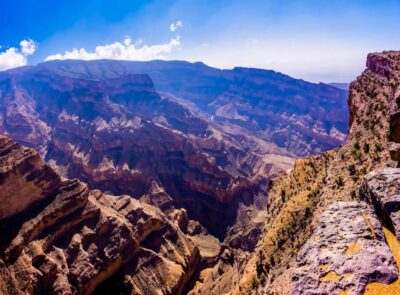

Private Day Trip to Nizwa & Jabal Shams (The Grand Canyon of Oman)
Read our review →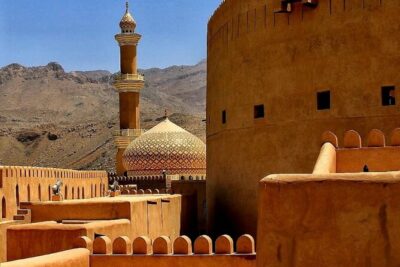
Full Day Private Tour to Nizwa and Jebel Shams from Muscat
Read our review →
Nizwa and Oman’s Grand Canyon: Full-Day Adventure
Read our review →
Private Overnight at Jebel Shams – 2 Days and 1 Night Tours
Read our review →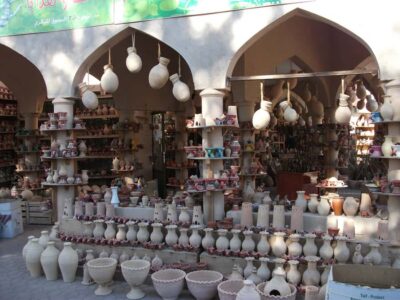
Private Nizwa and Jabel Akhdar-Shams with Lunch
Read our review →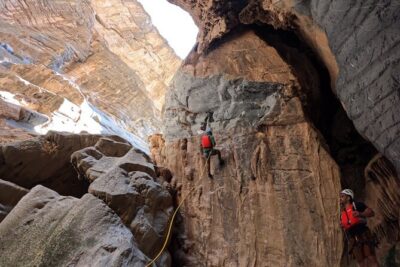
Full Day – Snake Canyon Adventure Tour in Jebel Shams region
Read our review →Browse the lists this tour appears in